The Numbers Don’t Lie, But They Don’t Tell the Whole Story
When Mayor Patricia Chen handed me the preliminary budget report for next year’s Harvest Moon Festival last Tuesday, the spreadsheet told a familiar story. Vendor fees up 18 percent. Insurance costs climbing another $3,200. The city’s contribution holding steady at $15,000 while everything else inflates around it.
But Chen’s face told a different story entirely. After 12 years organizing this festival, she knows what those numbers really mean. “We’re not just talking about corn dogs and face painting,” she said, leaning back in her office chair surrounded by three decades of festival photos. “We’re talking about whether the Hendersons can afford their booth space this year, and whether our local nonprofits lose their biggest fundraising weekend.”
It’s a conversation happening in city halls across the country. National inflation hit 6.4 percent, but for small-town festivals, the real impact shows up in places economists never measure. Like the $800 increase in liability insurance that forces organizers to choose between hiring security or keeping admission free.

When Tradition Meets Economic Reality
Three weeks ago, I sat in on the festival planning committee meeting in the basement of the United Methodist Church. The same basement where this committee has met every third Thursday for 23 years. What changed this year was the tone.
Committee treasurer Bob Martinez pulled out receipts dating back to 2019. The cost of renting those big white tents jumped 40 percent. The high school band’s bus rental went from $400 to $650. Even the porta-potty company added a fuel surcharge.
But here’s what surprised Martinez when he dug deeper into the numbers. While costs climbed, vendor applications actually increased 12 percent this year. Local businesses see the festival as essential marketing, worth the higher fees. “The pottery studio signed up for a double booth this time,” Martinez noted. “They said last year’s festival sales carried them through the slow winter months.”
Sarah Kim from the chamber of commerce has been tracking these trends across our region. Festivals in towns under 15,000 people report similar patterns. Higher costs, yes, but also higher stakes. “When Main Street retail is struggling, these events become the lifeline,” she explained. “They’re not just community gatherings anymore. They’re economic engines.”
Innovation Born from Necessity
The Henderson family has run their caramel apple stand at every Harvest Moon Festival since 1987. This year, for the first time, they’re sharing booth space with three other vendors. It started as a cost-cutting measure when booth fees jumped to $275. Now it’s become something else entirely.
“We’ve got the apples, Jenny makes those incredible kettle corn varieties, and Mike brings his wood carvings,” explained Linda Henderson. “People love the variety, and we’re splitting costs four ways instead of each of us struggling alone.”
Festival coordinator Maria Santos calls it “collaborative vending,” and she’s seeing it everywhere. The face painting booth now offers temporary tattoos. The quilt guild partnered with the historical society for a combined display. Even the fire department joined forces with the EMT volunteers for their dunking booth fundraiser.
It’s not just about saving money. Santos points out that these partnerships create more dynamic attractions. “When people see four different craftspeople working in one space, they stay longer. They buy more. They talk to more neighbors.”
The Hidden Infrastructure of Community
Most people walking through the festival grounds next Saturday won’t notice the months of phone calls, permit applications, and budget negotiations that made it possible. They won’t see the 6 a.m. setup crew or the midnight breakdown team. They definitely won’t know about the heated city council debate over whether to increase the festival’s line item in next year’s budget.
But they will notice other things. Like how Mrs. Patterson from the library knows every kid’s name when she hands out free books. How the high school seniors use festival volunteer hours to fund their graduation party. How the Methodist church’s chili booth raises money for the food pantry that quietly feeds 40 families each month.
This infrastructure of connection doesn’t appear in any budget report. Yet it’s what transforms a collection of vendor booths into something irreplaceable. Last month, when the Riverside Cafe closed after 15 years, owner Janet Cole said the community support she felt every festival season was one of the hardest things to leave behind.
“People would come to my booth just to check on me,” Cole remembered. “Not to buy coffee, but to see how business was going, whether I needed anything. You can’t put a price on that kind of caring.”
Looking Forward: What Sustainability Really Means
Next year’s budget meeting is scheduled for January 15th. Chen already knows the conversation will be difficult. Rising costs aren’t slowing down, and the city’s revenue streams remain limited. But she’s also seen something in the data that gives her hope.
Attendance has grown every year for the past five years. Not dramatically, but consistently. More important, the economic impact study commissioned last year showed festival weekend generates approximately $78,000 in local spending. That’s nearly five times the city’s investment.
The real measure of success, though, might be in the details. Like how the festival committee now includes four people under 35. How local businesses report their best sales weekend of the year. How families plan their entire October around this one Saturday in our town square.
Chen put it simply: “We’re not just preserving a tradition. We’re investing in what makes this place worth staying in.”
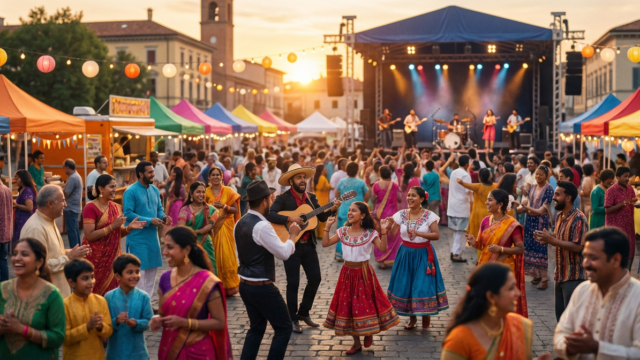
The Harvest Moon Festival runs from 10 a.m. to 8 p.m. this Saturday in Memorial Park. If you see me there, I’ll be the one with the notebook, asking vendors about their sales and watching how this community comes together when it matters most. Because sometimes the best stories happen right in our own backyard.