
When the Guns Fell Silent: January 19 and What Came After
On January 19, 2025, after 15 months of continuous fighting that claimed more than 46,000 Palestinian lives according to Gaza health authorities, the shooting stopped. I remember exactly where I was when the news broke: hunched over my desk, phone ringing off the hook, trying to reach anyone who could confirm what felt almost impossible to believe. A ceasefire, brokered by Qatar, Egypt, and the United States, had finally taken hold.

But here’s what I’ve learned covering everything from neighborhood zoning disputes to municipal crises: a ceasefire agreement on paper and a ceasefire on the ground are two entirely different things. Numbers tell part of that story, though they never tell all of it. So I started doing what I always do: calling sources, checking reports, cross-referencing data from multiple agencies. What emerged was a portrait of a fragile arrangement that has delivered some tangible results while teetering on the edge of collapse.
The Hostage Exchange: 25 Released, But the Math Doesn’t Add Up Yet
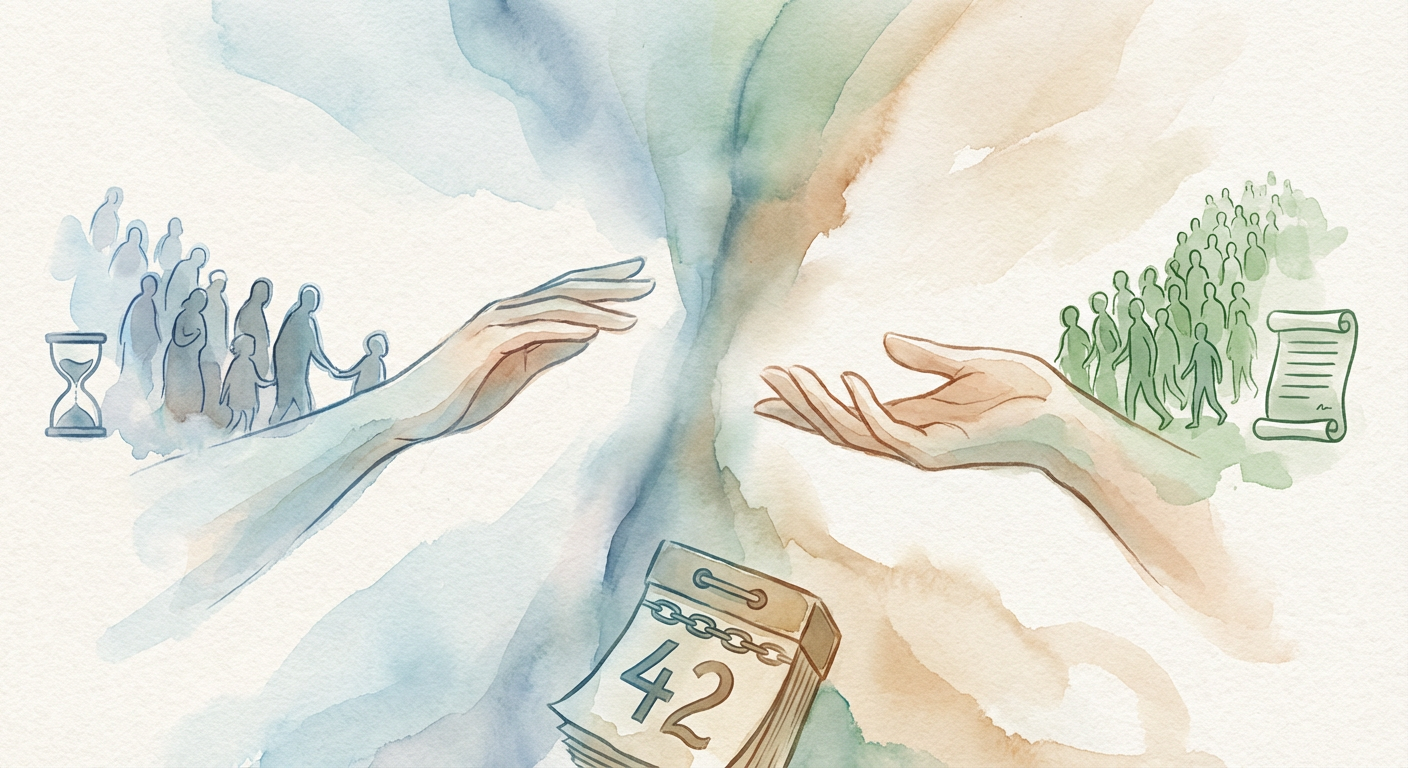
Phase 1 of the agreement was straightforward enough on its face. Hamas would release 33 Israeli hostages over 42 days. In exchange, Israel would release approximately 1,900 Palestinian prisoners, according to the framework published by the Israeli Prime Minister’s Office. Simple arithmetic, or so it seemed.
By late February, 25 of those 33 hostages had been released. That’s progress, measurable and real. But progress stalled. Negotiations for Phase 2, which would cover the remaining hostages and theoretically establish a permanent end to the war, ground to a halt. I’ve watched enough negotiations fail to recognize the pattern: each side accusing the other of moving goalposts, neither willing to be the first to blink. The remaining eight hostages remain in limbo, and so does any permanent resolution. One Israeli family member told me through a mutual contact that the emotional whiplash is almost worse than the original uncertainty. They had their hopes raised and then dashed within weeks.
Aid Trucks and the Infrastructure of Survival
If there’s one metric that shows the ceasefire actually changed something tangible on the ground, it’s this: the UN World Food Programme reported that over 900 aid trucks entered Gaza during the first week of the ceasefire. That’s compared to fewer than 100 trucks per day in late 2024. Nine hundred trucks in seven days versus 700 in the same span just weeks earlier.
What does that mean? It means medicine arriving. It means food reaching distribution centers. It means water trucks getting to neighborhoods where children were drinking contaminated groundwater. I spoke with a logistics coordinator for an international NGO who told me the difference was like someone finally opening a door that had been barricaded shut. The need is still staggering, the infrastructure still devastated, but at least aid workers can now do their jobs without calculating routes around active combat zones.
For the broader context on what’s happening on the ground, UN OCHA Gaza Humanitarian Update provides ongoing reporting, though I’d recommend reading it alongside ground reports from organizations with actual staff in Gaza.
The Reconstruction Question: Fifty-Three Billion Reasons to Worry
Here’s where the numbers get almost too large to comprehend. The World Bank estimated in January 2025 that rebuilding Gaza would cost between $53 billion and $80 billion over the next decade. One World Bank official called it one of the most complex urban reconstruction challenges since World War II. Not just difficult. The most difficult in roughly 80 years.
Think about that for a moment. Gaza’s annual GDP before the war was around $8 billion. We’re talking about reconstruction costs six to ten times that figure. Where does that money come from? Who guarantees it gets spent on reconstruction and not diverted? How do you even begin rebuilding when Phase 2 negotiations have collapsed? These aren’t rhetorical questions. They’re the actual questions keeping serious development professionals awake at night.
For deeper analysis on what reconstruction might actually entail, the World Bank Gaza Reconstruction Assessment is essential reading, though I’d caution that documents like these are written in the conditional tense for a reason. They assume conditions that may not materialize.
What the Numbers Don’t Tell You
I’ve been a reporter long enough to know that statistics, while important, are often the skeleton of a story rather than the full body. Yes, 25 hostages have been released. Yes, aid has increased. Yes, the war has stopped. But what about the people living in tent camps, waiting for news of missing family members? What about the teachers trying to get schools reopened with rubble still blocking the doors? What about the bread baker I heard about from a contact who has to wait hours every day for electricity just to turn on his ovens?
The ceasefire is real. The cessation of large-scale military operations is real. But permanence? That’s what remains uncertain. Phase 1 delivered hostages and opened supply lines. Phase 2 collapsed before it really began. That’s the story these numbers are actually telling: a moment of reprieve in a situation that remains fundamentally unresolved.
I’m tracking developments closely and would genuinely like to hear what you’re seeing, reading, or learning from your own networks. If you have details from Gaza or connected communities that add layers to this picture, I’m listening. That’s how we get closer to the full story.