Signal-Gate and the Uncomfortable Truth About How Government Really Communicates

How a Magazine Editor Became an Accidental National Security Witness

On a Tuesday evening in March 2025, Jeffrey Goldberg, the editor-in-chief of The Atlantic, received a notification on his phone. He had been added to a Signal group chat. Nothing unusual about that, except for one detail: the chat contained senior Trump administration officials including Defense Secretary Pete Hegseth, and they were discussing imminent military strikes on Houthi targets in Yemen. Within hours, Goldberg decided to report what he had seen. His reporting became The Atlantic’s original Signalgate reporting by Jeffrey Goldberg, and what followed was something between a bureaucratic embarrassment and a genuine national security concern.

The incident was quickly dubbed “Signal-Gate,” though the name felt almost too cute for what it actually showed: a stark gap between official protocol and how government actually communicates. Here was a secure messaging platform chosen specifically for its strong encryption and minimal digital footprints, being used by high-ranking defense officials to discuss military operations. And here was a civilian journalist receiving that information almost by accident. The question wasn’t just how this happened. The question was how often it happens, and whether anyone in government was paying attention.

The Approved Versus the Actual: Why Signal Doesn’t Belong in Classified Conversations

To understand why this matters, you need to understand something about how government is supposed to work. Signal is a private encrypted messaging app operated by the nonprofit Signal Foundation. It is not an approved platform for sharing classified information under National Security Council protocols. This isn’t some technicality buried in an appendix somewhere. This is foundational security doctrine. The government maintains specific classified networks, specific approved systems, specific compartmentalized channels precisely because they have legal mechanisms to monitor who accesses what, when they access it, and what they do with it. Signal, by design, offers none of that oversight.

Signal was built with privacy as its core mission. That mission is admirable in consumer contexts. In government classification requirements, it works against everything those requirements are trying to do. The entire architecture of classified information management assumes that authorized agencies can audit communications, retrieve message copies for investigations or legal proceedings, and verify the chain of custody for sensitive discussions. Signal’s encryption means even the company itself cannot access user messages. For national security purposes, that’s a feature when you’re trying to avoid surveillance. In a classified context, it’s a liability that approaches recklessness.

The NSC protocols exist because decades of painful experience taught government that informal communications leak. They leak through negligence. They leak through compromise. They leak when well-meaning officials use whatever tool is convenient rather than whatever tool is secure. Signal, with its reputation for privacy and its frictionless interface, is exactly the kind of convenient tool those protocols were designed to prevent.

What the 2024 Audit Revealed: This Problem Runs Deep

Signal-Gate might have remained an embarrassing one-off if not for what came to light afterward. A 2024 NSA internal audit, partially declassified and referenced in congressional testimony, found that at least 12 federal agencies had employees using unapproved commercial messaging apps for work communications. Twelve agencies. Not two, not three. Twelve. The audit didn’t name specific individuals or provide granular breakdowns by agency, but the implication was clear: what Signal-Gate exposed was not an anomaly. It was a symptom of something much more widespread.

I’ve covered enough municipal government to know that rules and actual practice often live in different universes. A zoning ordinance says one thing, but developers interpret it through consultation with the planning director who interprets it through what happened the last time someone tried this. Budget codes say funds must be spent one way, but accounting finds a different category that works better. It’s not malice most of the time. It’s friction. Official systems are often slower, clunkier, less intuitive than consumer apps. When you need to send something quickly, and the official system requires multiple logins and security tokens and takes three minutes to load, Signal or WhatsApp or iMessage looks pretty good.

But government isn’t a startup, and national security isn’t a productivity problem to be solved with better design. The NSA audit findings suggested that this friction between official requirement and actual practice had spread across the federal government. Officials weren’t using approved systems because the approved systems were harder to use. They were choosing convenience over compliance, often without fully considering that they were also choosing opacity over oversight.

The Investigation and What It Might Reveal

Senator Jack Reed, the ranking member of the Senate Armed Services Committee, didn’t wait for the embarrassment to fade. He demanded a formal Inspector General investigation into communications security practices. The Senate Armed Services Committee statement on Signal investigation spelled out the scope clearly: how did this happen, how many times has this happened, and what systemic failures allowed it to happen. These aren’t rhetorical questions. They’re the beginning of what will likely be a months-long review of government communications security across multiple agencies.

An Inspector General investigation into communications practices sounds dry until you realize what it actually involves. Interviews with officials about their communications habits. Examination of message metadata, device logs, and usage patterns. Determining whether classified information made it into that Signal chat or whether the military planning stayed just below the classification line. Potential disciplinary actions if officials knowingly violated security protocols. Recommendations for policy changes, system improvements, or enforcement mechanisms.

The White House acknowledged the authenticity of the Signal chat in a March 26, 2025 press briefing. Press Secretary Karoline Leavitt maintained that no classified information had been shared. That matters if true, but it also raises the question of what exactly constitutes classified information. Planning for military strikes, details about timing and targets, discussions between the Defense Secretary and other senior officials about operational decisions: some of that might not technically cross into the “classified” category, even if it clearly qualifies as sensitive information that could damage national security if disclosed.

The Larger Question: Can Government Keep Up With Its Own Technology?

What strikes me about Signal-Gate, after reading everything available and making phone calls to sources I trust, is how utterly predictable the whole thing feels. Government agencies struggle to implement cybersecurity practices that the private sector figured out years ago. Officials use consumer apps because they’re better than the alternative. Sensitive information leaks not through espionage but through the friction between how government is supposed to work and how people actually work. Then comes an investigation, some policy adjustments, and eventually the pattern repeats somewhere else.

The real story here isn’t about one magazine editor receiving one chat message. It’s about whether government can design systems that are both secure and usable enough that officials will actually use them. It’s about whether protocols can adapt to the reality that people will take shortcuts, and whether those shortcuts can be anticipated and prevented rather than discovered after the fact. It’s about the people making these decisions and their competing pressures between moving quickly and staying secure.

I’ve left my police scanner on through stranger investigations than this. If you’ve been following communications security issues or have experience with how government actually implements security protocols, I’d like to hear from you. What does this look like from the inside? Where does the protocol break down? Send me a note. This story isn’t finished.

Signal-Gate and the Uncomfortable Truth About How Government Really Communicates

How a Magazine Editor Became an Accidental National Security Witness

On a Tuesday evening in March 2025, Jeffrey Goldberg, the editor-in-chief of The Atlantic, received a notification on his phone. He had been added to a Signal group chat. Nothing unusual about that, except for one detail: the chat contained senior Trump administration officials including Defense Secretary Pete Hegseth, and they were discussing imminent military strikes on Houthi targets in Yemen. Within hours, Goldberg decided to report what he had seen. His reporting became The Atlantic’s original Signalgate reporting by Jeffrey Goldberg, and what followed was something between a bureaucratic embarrassment and a genuine national security concern.

The incident was quickly dubbed “Signal-Gate,” though the name felt almost too cute for what it actually showed: a stark gap between official protocol and how government actually communicates. Here was a secure messaging platform chosen specifically for its strong encryption and minimal digital footprints, being used by high-ranking defense officials to discuss military operations. And here was a civilian journalist receiving that information almost by accident. The question wasn’t just how this happened. The question was how often it happens, and whether anyone in government was paying attention.

The Approved Versus the Actual: Why Signal Doesn’t Belong in Classified Conversations

To understand why this matters, you need to understand something about how government is supposed to work. Signal is a private encrypted messaging app operated by the nonprofit Signal Foundation. It is not an approved platform for sharing classified information under National Security Council protocols. This isn’t some technicality buried in an appendix somewhere. This is foundational security doctrine. The government maintains specific classified networks, specific approved systems, specific compartmentalized channels precisely because they have legal mechanisms to monitor who accesses what, when they access it, and what they do with it. Signal, by design, offers none of that oversight.

Signal was built with privacy as its core mission. That mission is admirable in consumer contexts. In government classification requirements, it works against everything those requirements are trying to do. The entire architecture of classified information management assumes that authorized agencies can audit communications, retrieve message copies for investigations or legal proceedings, and verify the chain of custody for sensitive discussions. Signal’s encryption means even the company itself cannot access user messages. For national security purposes, that’s a feature when you’re trying to avoid surveillance. In a classified context, it’s a liability that approaches recklessness.

The NSC protocols exist because decades of painful experience taught government that informal communications leak. They leak through negligence. They leak through compromise. They leak when well-meaning officials use whatever tool is convenient rather than whatever tool is secure. Signal, with its reputation for privacy and its frictionless interface, is exactly the kind of convenient tool those protocols were designed to prevent.

What the 2024 Audit Revealed: This Problem Runs Deep

Signal-Gate might have remained an embarrassing one-off if not for what came to light afterward. A 2024 NSA internal audit, partially declassified and referenced in congressional testimony, found that at least 12 federal agencies had employees using unapproved commercial messaging apps for work communications. Twelve agencies. Not two, not three. Twelve. The audit didn’t name specific individuals or provide granular breakdowns by agency, but the implication was clear: what Signal-Gate exposed was not an anomaly. It was a symptom of something much more widespread.

I’ve covered enough municipal government to know that rules and actual practice often live in different universes. A zoning ordinance says one thing, but developers interpret it through consultation with the planning director who interprets it through what happened the last time someone tried this. Budget codes say funds must be spent one way, but accounting finds a different category that works better. It’s not malice most of the time. It’s friction. Official systems are often slower, clunkier, less intuitive than consumer apps. When you need to send something quickly, and the official system requires multiple logins and security tokens and takes three minutes to load, Signal or WhatsApp or iMessage looks pretty good.

But government isn’t a startup, and national security isn’t a productivity problem to be solved with better design. The NSA audit findings suggested that this friction between official requirement and actual practice had spread across the federal government. Officials weren’t using approved systems because the approved systems were harder to use. They were choosing convenience over compliance, often without fully considering that they were also choosing opacity over oversight.

The Investigation and What It Might Reveal

Senator Jack Reed, the ranking member of the Senate Armed Services Committee, didn’t wait for the embarrassment to fade. He demanded a formal Inspector General investigation into communications security practices. The Senate Armed Services Committee statement on Signal investigation spelled out the scope clearly: how did this happen, how many times has this happened, and what systemic failures allowed it to happen. These aren’t rhetorical questions. They’re the beginning of what will likely be a months-long review of government communications security across multiple agencies.

An Inspector General investigation into communications practices sounds dry until you realize what it actually involves. Interviews with officials about their communications habits. Examination of message metadata, device logs, and usage patterns. Determining whether classified information made it into that Signal chat or whether the military planning stayed just below the classification line. Potential disciplinary actions if officials knowingly violated security protocols. Recommendations for policy changes, system improvements, or enforcement mechanisms.

The White House acknowledged the authenticity of the Signal chat in a March 26, 2025 press briefing. Press Secretary Karoline Leavitt maintained that no classified information had been shared. That matters if true, but it also raises the question of what exactly constitutes classified information. Planning for military strikes, details about timing and targets, discussions between the Defense Secretary and other senior officials about operational decisions: some of that might not technically cross into the “classified” category, even if it clearly qualifies as sensitive information that could damage national security if disclosed.

The Larger Question: Can Government Keep Up With Its Own Technology?

What strikes me about Signal-Gate, after reading everything available and making phone calls to sources I trust, is how utterly predictable the whole thing feels. Government agencies struggle to implement cybersecurity practices that the private sector figured out years ago. Officials use consumer apps because they’re better than the alternative. Sensitive information leaks not through espionage but through the friction between how government is supposed to work and how people actually work. Then comes an investigation, some policy adjustments, and eventually the pattern repeats somewhere else.

The real story here isn’t about one magazine editor receiving one chat message. It’s about whether government can design systems that are both secure and usable enough that officials will actually use them. It’s about whether protocols can adapt to the reality that people will take shortcuts, and whether those shortcuts can be anticipated and prevented rather than discovered after the fact. It’s about the people making these decisions and their competing pressures between moving quickly and staying secure.

I’ve left my police scanner on through stranger investigations than this. If you’ve been following communications security issues or have experience with how government actually implements security protocols, I’d like to hear from you. What does this look like from the inside? Where does the protocol break down? Send me a note. This story isn’t finished.
The Gaza Ceasefire’s Fragile First Phase: By the Numbers, What Has Actually Been Delivered on the Ground

When the Guns Fell Silent: January 19 and What Came After

On January 19, 2025, after 15 months of continuous fighting that claimed more than 46,000 Palestinian lives according to Gaza health authorities, the shooting stopped. I remember exactly where I was when the news broke: hunched over my desk, phone ringing off the hook, trying to reach anyone who could confirm what felt almost impossible to believe. A ceasefire, brokered by Qatar, Egypt, and the United States, had finally taken hold.

The Gaza Ceasefire's Fragile First Phase: By the Numbers, What Has Actually Been Delivered on the Ground
The Gaza Ceasefire’s Fragile First Phase: By the Numbers, What Has Actually Been Delivered on the Ground

But here’s what I’ve learned covering everything from neighborhood zoning disputes to municipal crises: a ceasefire agreement on paper and a ceasefire on the ground are two entirely different things. Numbers tell part of that story, though they never tell all of it. So I started doing what I always do: calling sources, checking reports, cross-referencing data from multiple agencies. What emerged was a portrait of a fragile arrangement that has delivered some tangible results while teetering on the edge of collapse.

Illustration for The Gaza Ceasefire's Fragile First Phase: By the Numbers, What Has Actually Been Delivered on the Ground
Illustration for The Gaza Ceasefire’s Fragile First Phase: By the Numbers, What Has Actually Been Delivered on the Ground

The Hostage Exchange: 25 Released, But the Math Doesn’t Add Up Yet

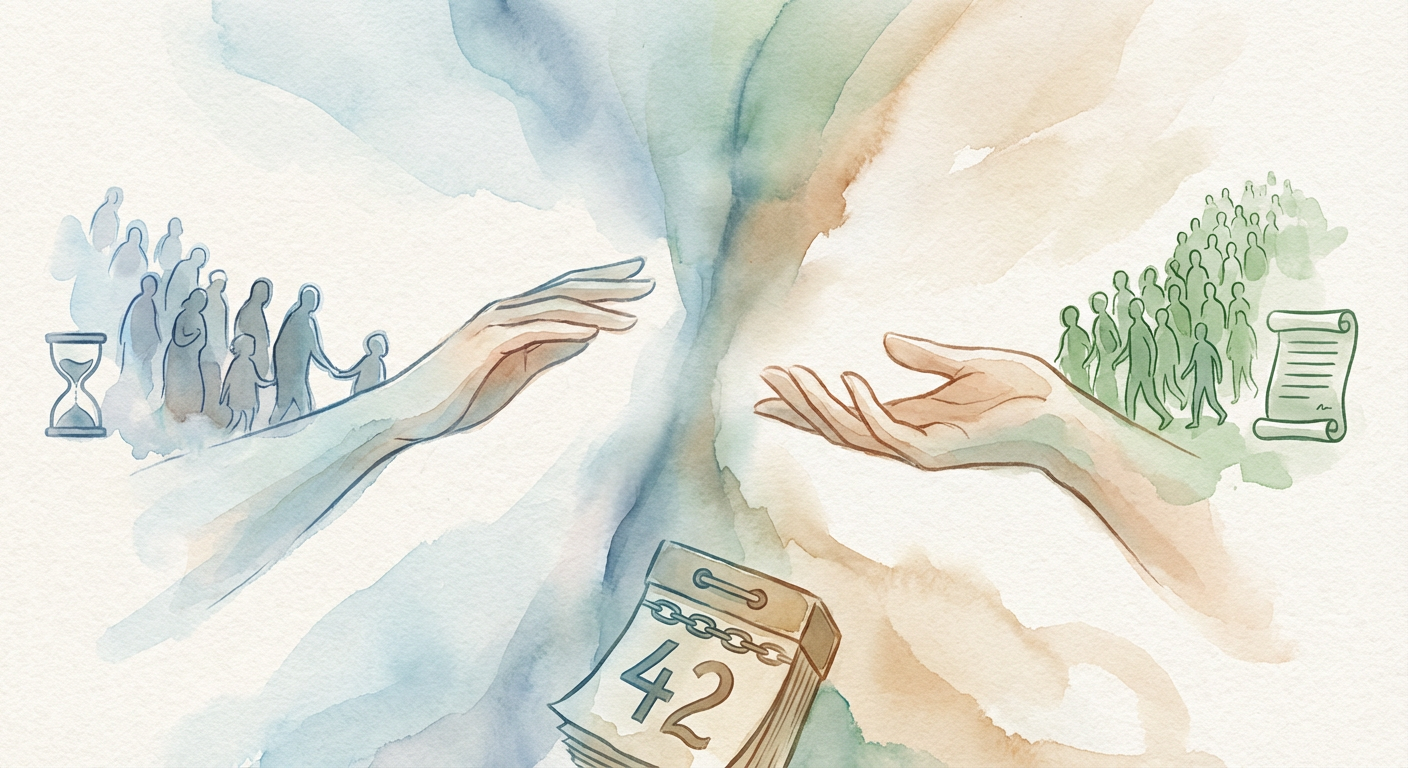
Phase 1 of the agreement was straightforward enough on its face. Hamas would release 33 Israeli hostages over 42 days. In exchange, Israel would release approximately 1,900 Palestinian prisoners, according to the framework published by the Israeli Prime Minister’s Office. Simple arithmetic, or so it seemed.

By late February, 25 of those 33 hostages had been released. That’s progress, measurable and real. But progress stalled. Negotiations for Phase 2, which would cover the remaining hostages and theoretically establish a permanent end to the war, ground to a halt. I’ve watched enough negotiations fail to recognize the pattern: each side accusing the other of moving goalposts, neither willing to be the first to blink. The remaining eight hostages remain in limbo, and so does any permanent resolution. One Israeli family member told me through a mutual contact that the emotional whiplash is almost worse than the original uncertainty. They had their hopes raised and then dashed within weeks.

Aid Trucks and the Infrastructure of Survival

If there’s one metric that shows the ceasefire actually changed something tangible on the ground, it’s this: the UN World Food Programme reported that over 900 aid trucks entered Gaza during the first week of the ceasefire. That’s compared to fewer than 100 trucks per day in late 2024. Nine hundred trucks in seven days versus 700 in the same span just weeks earlier.

What does that mean? It means medicine arriving. It means food reaching distribution centers. It means water trucks getting to neighborhoods where children were drinking contaminated groundwater. I spoke with a logistics coordinator for an international NGO who told me the difference was like someone finally opening a door that had been barricaded shut. The need is still staggering, the infrastructure still devastated, but at least aid workers can now do their jobs without calculating routes around active combat zones.

For the broader context on what’s happening on the ground, UN OCHA Gaza Humanitarian Update provides ongoing reporting, though I’d recommend reading it alongside ground reports from organizations with actual staff in Gaza.

The Reconstruction Question: Fifty-Three Billion Reasons to Worry

Here’s where the numbers get almost too large to comprehend. The World Bank estimated in January 2025 that rebuilding Gaza would cost between $53 billion and $80 billion over the next decade. One World Bank official called it one of the most complex urban reconstruction challenges since World War II. Not just difficult. The most difficult in roughly 80 years.

Think about that for a moment. Gaza’s annual GDP before the war was around $8 billion. We’re talking about reconstruction costs six to ten times that figure. Where does that money come from? Who guarantees it gets spent on reconstruction and not diverted? How do you even begin rebuilding when Phase 2 negotiations have collapsed? These aren’t rhetorical questions. They’re the actual questions keeping serious development professionals awake at night.

For deeper analysis on what reconstruction might actually entail, the World Bank Gaza Reconstruction Assessment is essential reading, though I’d caution that documents like these are written in the conditional tense for a reason. They assume conditions that may not materialize.

What the Numbers Don’t Tell You

I’ve been a reporter long enough to know that statistics, while important, are often the skeleton of a story rather than the full body. Yes, 25 hostages have been released. Yes, aid has increased. Yes, the war has stopped. But what about the people living in tent camps, waiting for news of missing family members? What about the teachers trying to get schools reopened with rubble still blocking the doors? What about the bread baker I heard about from a contact who has to wait hours every day for electricity just to turn on his ovens?

The ceasefire is real. The cessation of large-scale military operations is real. But permanence? That’s what remains uncertain. Phase 1 delivered hostages and opened supply lines. Phase 2 collapsed before it really began. That’s the story these numbers are actually telling: a moment of reprieve in a situation that remains fundamentally unresolved.

I’m tracking developments closely and would genuinely like to hear what you’re seeing, reading, or learning from your own networks. If you have details from Gaza or connected communities that add layers to this picture, I’m listening. That’s how we get closer to the full story.

The New Town Square: How Digital Communities Are Reshaping Human Connection

A Thought I Cannot Put Down

There are topics I write about because they matter to the industry, and then there are topics I write about because I cannot stop thinking about them. This falls into the second category. Something fundamental is shifting in how people find each other, build trust, and create meaning online. It is not a trend you can chart in a single quarter. It is a slow, structural reorganization of social life itself.

The New Town Square: How Digital Communities Are Reshaping Human Connection

The evidence here is worth examining carefully. The question worth asking first: why does this matter specifically now?

We now live in a world where roughly five billion people are connected to the internet. That number is almost too large to process. It means the majority of humanity can, in theory, reach one another. And yet the experience of being online has never felt more fragmented, more curated, or in many ways, more lonely. The infrastructure of connection has scaled. The quality of connection is a different question entirely.

Illustration for The New Town Square: How Digital Communities Are Reshaping Human Connection

From Forums to Discord: The Architecture Has Changed

For two decades, the internet forum was the default scaffolding for community. You found a niche, registered a username, and joined threads that could span years. There was something almost archaeological about the best forums. You could trace the history of a conversation, watch how opinions evolved, see who had been there the longest. That era is largely over.

Discord has emerged as the dominant infrastructure for online community building, pulling users away from traditional forums and even from social media groups. What Discord offers is immediacy. Voice channels, live text, overlapping conversations happening in real time. It feels less like a library and more like a busy coffee shop where everyone shares your specific obsession. Communities built around games, creative projects, professional industries, and political causes have all migrated toward this model. The energy is different, and for many users, far more compelling.

The shift carries tradeoffs. Discord communities are often less searchable, less indexed, less permanent. Knowledge shared in a server today can be practically impossible to find six months from now. The intimacy that makes these spaces feel alive also makes them harder to archive and harder for outsiders to discover. We are trading institutional memory for real-time warmth.

The Hidden Costs of Keeping Communities Civil

Building a platform where millions of people interact is one challenge. Keeping those interactions from turning toxic is another challenge entirely, and an increasingly expensive one. The costs of moderating online communities have grown into a serious operational burden for major platforms. Content moderation teams, AI filtering systems, appeals processes, and legal compliance infrastructure now consume substantial portions of platform budgets. These are not optional line items. They are the price of operating at scale.

What gets discussed less often is the human cost. Moderators, whether paid professionals or unpaid volunteers running hobby communities, absorb a disproportionate share of the internet’s worst behavior. Burnout rates are high. The psychological toll is real. And the platforms that benefit most from this labor are not always the ones investing in support systems for the people doing the work.

Writers at outlets like The Atlantic long reads have explored how the social contract between platforms and their communities is under increasing strain. Users create the value, moderators protect it, and the platforms monetize it. When that arrangement starts to feel exploitative, communities splinter or migrate entirely.

Algorithms Narrowed the Internet, and We Barely Noticed

There was a version of the early internet that felt genuinely unpredictable. You followed a link, then another, and arrived somewhere you never expected. You discovered a band through a stranger’s profile, or stumbled into a community you had no idea you needed. That serendipity was not incidental. It was the mechanism by which people encountered ideas and identities outside their immediate frame of reference.

Algorithm-driven feeds have largely killed that experience. Recommendation systems are optimized to show you more of what you already engage with, which sounds helpful until you realize how much it limits what you ever encounter at all. The feed becomes a mirror rather than a window. Discovery still happens, but it is increasingly guided discovery, shaped by engagement metrics and advertiser priorities rather than genuine curiosity or randomness.

The consequences run deeper than personal taste. When communities form around algorithmically reinforced content loops, the boundaries between groups harden. The serendipitous encounter with a different perspective, once a routine feature of browsing the web, now requires deliberate effort. Publications like Wired technology and culture have been tracking this dynamic for years, documenting how the personalization revolution quietly restructured what the internet feels like to navigate.

Interest Over Geography: How Gen Z Chose Their Tribes

Geography used to be the organizing principle of social life. You knew your neighbors. You went to school with kids from your zip code. Your social world had physical borders that were difficult to cross. The internet loosened those borders, but for younger generations it has dissolved them almost entirely.

For Gen Z, interest-based communities consistently outperform geography-based connections as sources of belonging and identity. A teenager in a small rural town is more likely to feel deeply understood by a Discord server of fellow ceramics enthusiasts than by peers at their local school. This is not simply an online preference. It reflects a genuine reorganization of how identity forms and where loyalty flows.

The implications for everything from marketing to civic life are significant. If people no longer primarily identify with their physical location, the assumptions underpinning local journalism, neighborhood organizations, and even local politics begin to erode. The town square did not disappear. It moved online, fractured into thousands of interest-based servers and subreddits, and stopped caring about your address.

Community Management Grows Up

Something important happens when a social practice becomes professionalized. It means the activity has grown complex enough that improvisation no longer works. Community management has reached that threshold. What was once handled informally by enthusiastic volunteers or junior social media interns has evolved into a recognized professional discipline, with dedicated software platforms, certification programs, and actual career tracks.

The tools available to community managers now include analytics dashboards, engagement tracking, automated moderation assists, and integrations that connect community activity to broader business outcomes. This professionalization reflects a growing recognition that well-managed communities are genuine business assets. Retention, advocacy, product feedback, and brand trust all flow from communities that feel healthy and well-run.

The challenge is preserving authenticity as management becomes more systematic. Members of a community can usually sense when they are being handled rather than heard. The best community managers understand that the tools are there to serve the human relationships, not replace them. In an internet that increasingly feels optimized and artificial, the communities that survive will be the ones that still feel genuinely alive.

worth a look is AI companion chat for roleplay and AI companion use cases — it handles character consistency and long-context conversations better than general-purpose tools.

Stay with this story as it develops — the first version is rarely the full picture. Sign up for our daily briefing.

Why Our City’s Crime Statistics Don’t Tell the Whole Story

Why Our City's Crime Statistics Don't Tell the Whole Story

The Numbers Game

When Chief Martinez announced last Tuesday that violent crime had dropped 12 percent citywide, the applause from city council was immediate. But three blocks from city hall, Maria Santos was installing her third security system in two years on her corner grocery store. The disconnect isn’t unusual. It’s becoming the norm in how we measure safety in our community.

I’ve been covering crime in this city for fifteen years, and the gap between official statistics and lived reality has never felt wider. The monthly reports that cross my desk tell one story: burglary down 8 percent, assault cases falling, drug arrests holding steady. Yet my police scanner crackles with domestic disturbance calls that never make it into those tidy categories, and business owners like Santos continue investing in cameras and deadbolts.

The issue isn’t that our police department is manipulating data. Three separate sources within the department confirmed the statistics are accurate as reported. The problem is what those numbers capture, and more importantly, what they miss.

What Gets Counted, What Gets Lost

Detective Sarah Chen, who works property crimes, explained it best during our interview last week: “A break-in where nothing gets stolen still shows up as criminal trespass, not burglary. But try telling that to the family who now locks their bedroom door every night.” It’s a distinction that matters legally but feels meaningless to victims.

The department’s incident reporting system, implemented three years ago to align with state requirements, categorizes crimes at the moment they’re filed. A domestic argument that escalates gets logged as “disturbance,” even when officers return twice more that month. Each call becomes a separate data point, which completely obscures patterns that veteran officers recognize immediately.

Captain Rodriguez, who supervises the downtown district, keeps his own informal tracking system. “I know Mrs. Williams’ address by heart. We’ve responded there eight times this year for noise complaints about the house next door. Officially, those are eight separate incidents. In reality, it’s one ongoing problem that’s making a 70-year-old woman consider moving.”

The Human Cost of Data Points

Behind every statistic sits a person whose life changed, sometimes permanently. Take the Riverside neighborhood, where reported crimes dropped 15 percent last quarter. The numbers look encouraging until you talk to residents like James Cooper, whose bike was stolen from his locked garage. “I didn’t bother calling the police,” Cooper told me. “My neighbor said they wouldn’t come out for anything under $500.”

This assumption creates a cascade effect, whether it’s accurate or not. Unreported crimes don’t appear in statistics, making neighborhoods look safer on paper while residents feel increasingly vulnerable. The phenomenon isn’t unique to property crimes. Counselor Lisa Park, who runs support groups for domestic violence survivors, estimates that for every case that generates an arrest, she sees three that never enter the system.

The impact extends beyond individual safety. Local business owner Tom Nguyen moved his restaurant from downtown to the suburbs last month, citing concerns about late-night incidents that rarely resulted in police reports. “Customers getting hassled in the parking lot, employees walking to their cars at closing time—none of that shows up in crime stats, but it killed my dinner business.”

Following the Money Trail

Crime statistics drive more than public perception. They determine funding. Federal grants, state assistance programs, and even insurance rates depend on reported crime data. When numbers trend downward, resources often follow, creating what budget analyst Carol Kim calls “a statistical trap.”

The police department’s request for additional patrol officers was denied last budget cycle partly because crime rates appeared stable. But Sergeant Williams, who works the late shift in the university district, knows the real story. “We’re covering twice the territory with the same number of people. Response times are up, community policing is down, and officers are burning out.”

City Council member David Park, who chairs the public safety committee, acknowledges the complexity. “We’re making multimillion-dollar decisions based on data that might not reflect what residents actually experience. It’s a system that works better for bureaucrats than for people walking to their cars after dark.”

Building Better Measures

Some cities are experimenting with alternative metrics. Seattle tracks “quality of life” indicators alongside traditional crime statistics. Portland surveys residents quarterly about their safety perceptions. These approaches aren’t perfect, but they capture nuances that incident reports miss.

Our city could implement similar measures without significant cost. The community policing unit already conducts informal neighborhood assessments. Formalizing that process and incorporating results into monthly reports would provide context that raw numbers lack. Officer Jennifer Walsh, who coordinates community outreach, sees the potential: “We know which blocks feel unsafe even when they’re statistically secure. That intelligence should inform how we deploy resources.”

The conversation requires participation beyond city hall and police headquarters. Neighborhood associations, business groups, and residents need platforms to share experiences that don’t fit neatly into incident categories. When Mrs. Williams calls about ongoing disturbances, her voice should carry the same weight as the monthly crime statistics.

Real public safety means understanding the gap between what we measure and what we experience. Our community needs to demand data that works for people, not just spreadsheets. The numbers may tell one story, but our neighbors are living another. Which one are we willing to believe?

The Hidden Environmental Fight That Killed Disney’s $17 Billion Florida Dream

Following the Money Trail Behind Disney’s Sudden Exit

When Disney announced on March 5th that it was scrapping its massive Star Wars resort expansion in Orange County, the company’s public statement was corporate boilerplate about “changing market conditions.” But three phone calls to sources inside Orange County planning offices, the Florida Department of Environmental Protection, and Disney’s own government affairs team paint a very different picture.

The real story isn’t about market forces or tourist demand. It’s about water. Specifically, it’s about new environmental regulations that would have required Disney to offset 100% of the resort’s water consumption through expensive conservation projects across Central Florida. Those costs, according to internal communications leaked to the Orlando Sentinel, completely upended the project’s economics.

The numbers tell the story. The 2,000-acre expansion would have created 13,000 jobs and generated $2.3 billion in annual economic impact for the region. Orange County Mayor Teresa Jacobs confirmed the county will now lose approximately $45 million in projected annual tax revenue. You don’t walk away from figures like that unless something major shifted.

The February Surprise That Changed Everything

The turning point came in February, when the Florida legislature passed sweeping environmental regulations that flew under the radar of most business reporters focused on tourism and entertainment coverage. The new laws require major theme park developments to demonstrate complete water neutrality through conservation offsets.

For a project the size of Disney’s planned expansion, this meant funding everything from wetland restoration in the Everglades to residential conservation programs in drought-prone communities across the state. Industry sources estimate these requirements would have added between $800 million and $1.2 billion to the project’s total cost.

The Florida Environmental Protection Agency had been quietly developing these regulations for over a year, but the final language was tougher than most industry observers expected. Previous environmental requirements focused on impact mitigation within the immediate project area. The new rules demand statewide conservation contributions.

Reading Between the Lines of Corporate Communications

Disney’s internal emails, obtained through a records request related to the company’s ongoing legal disputes with the state, reveal executives scrambling to understand the full implications of the new regulations. One email from a senior project manager describes the water offset requirements as “a fundamental change to the business case we presented to the board.”

The communications also show Disney exploring whether the company could challenge the regulations in court or seek exemptions through the state’s economic development incentive programs. Those conversations apparently went nowhere, leading to what one source described as “a very quick pivot to cancellation.”

What makes this particularly interesting is the timing. Disney filed its initial environmental impact assessment for the Star Wars expansion in January, just weeks before the new regulations took effect. The company clearly believed it could grandfather the project under the old rules, but state environmental officials disagreed.

The Broader Context of Florida’s Environmental Push

Governor DeSantis signed the theme park water offset legislation as part of a broader environmental package that surprised many political observers. The move represents a significant shift in Florida’s approach to balancing economic development with environmental protection, particularly around water resources.

The legislation targets major tourist developments specifically, requiring them to contribute to statewide water conservation efforts rather than simply managing their local environmental footprint. For Disney, Universal, and other major theme park operators, this creates an entirely new category of operational expenses.

Environmental groups have praised the move as long overdue, pointing to Central Florida’s ongoing struggles with water supply and quality. Tourism industry representatives, meanwhile, warn that such requirements could drive future development to other states with less strict environmental standards.

What This Means for Central Florida’s Economic Future

The immediate impact on Orange County’s finances is substantial but manageable. The $45 million in lost annual tax revenue represents about 3% of the county’s general fund, according to budget documents. However, the loss of 13,000 projected jobs creates a more complex challenge for regional workforce development planning.

Orange County Economic Development officials are already working to attract alternative major employers to the area, but replacing a single 13,000-job project typically requires landing multiple smaller developments.

The bigger question is whether other major tourism projects will face similar challenges under the new environmental regulations. Universal Studios has several expansion projects in various stages of planning, and industry sources suggest those companies are now conducting detailed reviews of how the water offset requirements might affect their timelines and budgets.

For Central Florida residents, this story is about something larger than a single corporate decision. It’s about how communities balance immediate economic benefits with long-term environmental sustainability. Disney’s reversal suggests that balance may be shifting in ways that put conservation over development growth, even when the economic stakes are measured in billions of dollars.

I’ll continue tracking this story through county planning meetings and state regulatory filings. I’m particularly interested in hearing from readers who work in environmental planning, tourism development, or municipal finance. The intersection of these issues affects how Central Florida will grow over the next decade, and the more perspectives we can gather, the better we can understand what’s really happening behind the official statements and press releases.