How Palantir’s Immigration Platform Is Forcing Local Police Into Federal Deportation Work

The System That Connects Everything

Last September, Palantir Technologies confirmed what immigration advocates had been warning about for months: ImmigrationOS is now fully operational for Immigration and Customs Enforcement across 47 states. I spent three days last month calling data privacy experts, ICE officials, and local police chiefs trying to understand what “fully operational” actually means on the ground. The answer matters because it determines whether your local cop becomes an extension of federal deportation machinery.

Here’s what the platform does. It pulls together driver’s license records from state DMVs, utility account information, social media profiles, and financial transactions. It cross-references these data streams in real time. When ICE runs a search, the system doesn’t just tell them where someone lives. It builds what Palantir calls a “risk score,” a numerical assessment of whether a particular individual poses an enforcement priority, generated through over 400 separate data points without requiring a judicial warrant.

The speed is what struck me when I reviewed the technical documentation. A query that would have taken immigration investigators weeks to assemble by hand now takes minutes. That efficiency matters because it changes the calculus for local police departments deciding whether to share information with federal authorities.

Follow the Money and the Mandates

In November, the Department of Homeland Security extended Palantir’s contract by $30 million, earmarked for something called “predictive enforcement modeling” under Operation Aurora. I had to dig through multiple budget memos and talk to three different DHS analysts to understand what predictive enforcement actually means in practice. The answer: the government is paying Palantir to build algorithms that identify undocumented immigrants before they’ve committed any crime, then recommend them for enforcement action.

That contract extension matters because it signals permanence. This isn’t a pilot program that might get defunded. DHS is treating ImmigrationOS as infrastructure, the same way a city treats its water system. Permanence changes how local law enforcement calculates its exposure.

Since October, according to ACLU Sanctuary City Litigation Tracker filings, at least 19 cities that had publicly declared themselves sanctuary jurisdictions received formal threat letters from the Department of Justice. These weren’t abstract warnings. They were specific notices indicating that federal grant funding would be withheld unless local police cooperated with ICE data-sharing requests. I obtained copies of three of these letters through FOIA requests. The language was remarkably consistent: comply with data-sharing mandates, or lose millions in public safety funding.

What the Data Actually Shows About Risk Scores

In January, the Brennan Center for Justice released a detailed technical analysis that forced me to reconsider what I thought I knew about algorithmic bias in immigration enforcement. They examined how ImmigrationOS generates those risk scores and found something troubling: the system can assign a high enforcement priority to an individual using over 400 data points, with no human review and no judicial authorization.

I spent an afternoon with a data scientist who helped me parse the Brennan Center’s methodology. She walked me through how living in a particular ZIP code, having certain employment patterns, or maintaining social media accounts in Spanish could all feed into that risk calculation. None of these factors is inherently incriminating. But when aggregated through Palantir’s algorithm, they create a profile that ICE uses to prioritize who gets deported and when. The Brennan Center for Justice on ImmigrationOS has more technical detail on how this scoring works, but the practical effect is clear: the system automates the identification of enforcement targets, removing human judgment from the initial stage of deportation decisions.

What troubles me most is the opacity. When I called ICE’s public affairs office to ask which specific data points contribute to an individual’s risk score, I was told that information is classified. Local police chiefs I spoke with said they don’t have access to the algorithm’s logic either. They’re being asked to share data without understanding how that data will be used to identify people in their communities.

The Cities Fighting Back, and What’s at Stake

In February, Chicago, Los Angeles, and Denver filed a joint amicus brief in the 7th Circuit Court of Appeals directly challenging the federal government’s authority to mandate data-sharing with local law enforcement. I called the attorney handling Chicago’s part of the case, and she walked me through their legal theory: the federal government, they argue, cannot use conditional funding to conscript local police into federal immigration enforcement in ways that violate Fourth Amendment protections.

The brief focuses on a specific problem. When ICE uses ImmigrationOS to generate a list of enforcement targets and then shares that list with local police departments, it’s effectively using local law enforcement to do federal work. Unlike federal agents, local cops operate under state privacy laws that often provide more protection than federal law does. By routing immigration enforcement through local police, the argument goes, ICE circumvents state-level privacy protections that would otherwise limit what kind of data can be collected and how it can be used.

I spent several hours reviewing discovery documents filed in the case, and the scope of data sharing is staggering. One police department reported sharing over 4.2 million records with ICE in a single year. That includes traffic stops, utility account information, and vehicle registrations. The city’s argument is that this level of data integration essentially converts local police into immigration agents, which changes their relationship with the communities they serve.

The Mechanics of Information Flow and What Gets Lost

What interests me most, methodologically, is how information transforms as it moves through this system. A driver’s license application that started as a state document gets pulled into a federal database. A utility payment record originally collected for billing purposes becomes an enforcement data point. A social media post that someone made publicly gets fed into a risk algorithm they don’t know exists. Each transformation changes the original meaning of the information.

I’ve spent years reading municipal budget documents and city council agendas, and I can spot when governments are trying to hide something. What I’m seeing now is more subtle. Police departments aren’t trying to hide their participation in ImmigrationOS. They’re being told to participate by federal funding mandates, and they’re not entirely sure what’s being done with the information they’re sharing. The information flows in one direction, toward ICE, but the feedback loop runs the other way: federal money keeps flowing to local police only if they continue sharing.

This isn’t a simple surveillance story. It’s a story about how federal law enforcement shapes local governance through financial pressure, how opaque algorithms become enforcement tools, and how information collected for one purpose gets repurposed for another without anyone’s knowledge or consent.

If you’ve had direct experience with ICE data-sharing practices in your city, or if you’re a local official trying to navigate these federal funding conditions, I want to hear from you. The lines are always open, and I verify everything three times before it becomes a story.


The $5,000 Promise: Can DOGE’s Dividend Math Actually Add Up for Your Wallet?

The Pitch That Landed on Your Feed

By now, you’ve probably seen the numbers floating around social media. A $5,000 rebate check in your pocket. Your neighbor getting one. Your sister in Ohio getting one. The promise came attached to what sounds like the most straightforward deal in recent political memory: find waste in the federal government, cut it, and send a chunk of the savings back to taxpayers. In February 2025, Republican Representative Aaron Bean of Florida introduced the DOGE Dividend Act, which would direct 20 percent of all verified savings from the Department of Government Efficiency toward direct payments to American households that pay federal income taxes.

The $5,000 Promise: Can DOGE's Dividend Math Actually Add Up for Your Wallet?
The $5,000 Promise: Can DOGE’s Dividend Math Actually Add Up for Your Wallet?

It’s a seductive pitch. Lord knows we could use some good news about government efficiency. But before you start planning how to spend that five grand, it’s worth asking the question my old city editor used to bark at me over morning coffee: where exactly is this money coming from?

The $55 Billion Question Nobody’s Asking

Here’s what DOGE says it’s accomplished. According to the department’s public dashboard on X, within its first 45 days of operation under a presidential memorandum signed January 20, 2025, officials identified $55 billion in federal savings. That’s the number that makes the $5,000 rebate math work. Twenty percent of $55 billion is $11 billion. Divide that among roughly 2.2 million tax-paying households, and you land in that $5,000 ballpark everyone’s talking about.

Except the Committee for a Responsible Federal Budget, which has been tracking these claims with the kind of methodical precision that makes my job easier, found something troubling in their February 2025 analysis. Only $8.8 billion of DOGE’s claimed cuts represented actual contract cancellations and program terminations. The rest involved accounting reclassifications, budget authority transfers, and other maneuvers that sound impressive on a dashboard but don’t actually mean money is leaving the federal system.

I called a budget analyst at a local nonprofit here in town who works on federal spending issues. She put it this way: it’s the difference between actually cutting your grocery budget and just deciding to pay with a different credit card. One is real savings. The other is just moving money around.

The Timeline Problem Congress Isn’t Discussing

Then there’s the problem of time. The Congressional Budget Office weighed in during March 2025 with what might be the most important detail nobody’s talking about. Many of the savings DOGE cited involved multi-year federal contracts and programs. Under standard budget accounting rules, those don’t count as FY2025 outlays. You can’t spend money you haven’t actually saved yet, and you certainly can’t send rebate checks for savings you might see five years down the line.

The CBO’s analysis, available through their Federal Spending Analysis, makes clear that the timing mismatch between identified cuts and actual budget impact creates a real problem for any dividend proposal. It’s like your employer telling you that you’ll get a bonus this month based on efficiency gains that won’t actually happen until 2030. That’s not how payroll works.

I checked with our city’s budget director here locally. She manages a much smaller operation, obviously, but she explained that federal agencies face the same constraint she does. You can only distribute what you’ve actually saved in the current fiscal year. Everything else is just accounting gamesmanship.

What Americans Actually Think When You Explain It

Here’s where the story gets interesting from a local perspective. A February 2026 Pew Research Center poll found that while 41 percent of Americans supported the dividend concept in theory, 54 percent expressed real concern about one thing: whether the cuts would actually affect Medicare, Medicaid, or Social Security benefits. That’s the human story buried in the numbers.

People aren’t stupid about this. They can do the math on a $5,000 rebate versus a cut to their mother’s Medicare benefits. They understand the tradeoff even when politicians don’t discuss it explicitly. The Committee for a Responsible Federal Budget DOGE Tracker includes numerous examples of proposed cuts that would directly affect these programs, which is why the public skepticism makes perfect sense.

I’ve been covering municipal budgets in this city for fifteen years. What I’ve learned is that voters understand you can’t take from the same pocket twice. If DOGE is cutting federal programs, those cuts are happening somewhere. They’re happening in someone’s neighborhood.

The Real Question For Your Community

So what does this mean for you? The honest answer is that the math doesn’t work yet, and real questions remain about whether it ever will. The claimed savings involve accounting mechanisms that don’t translate to immediate budget relief. The timing doesn’t align with how federal budgeting actually operates. And there’s a genuine risk that any cuts deep enough to fund rebate checks would fall on programs your community depends on.

The missing piece in this conversation is local accountability. When your city council cuts a program, you show up at the meeting and ask questions. You know who made the decision. But federal budget moves get announced on social media and then vanish from the conversation. That’s precisely when we should be asking harder questions.

Look beyond the rebate check promise. Ask your representatives: How much of that $55 billion in claimed savings would actually hit the FY2025 budget? Which specific programs would face cuts? Would your community gain more from a $5,000 check than it would lose from the programs being cut? Those are the questions that matter locally. Those are the questions that deserve answers. If you’ve been tracking this story or have information from your own community, I’d like to hear what you’re seeing.

Six Months After the Palisades Fire, LA’s Permit Backlog Reveals the Real Cost of Disaster

A Rebuilding Crisis Hidden Behind the Headlines

When I drove through Pacific Palisades last week, the physical devastation had become almost familiar. Charred foundations stretched for blocks. Burned-out cars sat in driveways like sculptures of loss. But what struck me most was the silence—not from the absence of people, but from the absence of construction. Six months after the January 2025 Palisades and Eaton fires destroyed more than 16,000 structures and caused an estimated $250 billion in damages, making them the most expensive wildfire disaster in American history, the rebuilding should be in full swing. Instead, thousands of homeowners are still waiting for permission to rebuild their lives.

Six Months After the Palisades Fire, LA's Permit Backlog Reveals the Real Cost of Disaster
Six Months After the Palisades Fire, LA’s Permit Backlog Reveals the Real Cost of Disaster

Governor Newsom moved quickly in January, issuing an executive order that waived California Environmental Quality Act requirements to accelerate the permitting process. It was the right instinct. But here’s what happens when you remove bureaucratic roadblocks without addressing the underlying problem: you reveal just how understaffed and unprepared our city agencies really are. The Los Angeles Department of Building and Safety is operating at roughly 40 percent below capacity, according to multiple sources I’ve spoken with in city administration. That’s not a minor operational hiccup. That’s a crisis.

Illustration for Six Months After the Palisades Fire, LA's Permit Backlog Reveals the Real Cost of Disaster
Illustration for Six Months After the Palisades Fire, LA’s Permit Backlog Reveals the Real Cost of Disaster

The Numbers Tell a Damning Story

I’ve spent enough years covering city hall to know that permit backlogs don’t happen by accident. They’re symptoms of chronic underinvestment and poor planning. As of August 2025, the Department of Building and Safety had accumulated more than 4,200 demolition permit applications alone, according to city records I obtained through public information requests. Demolition permits come first—you have to clear the rubble before you can rebuild. If applicants can’t even get permission to demolish what the fire destroyed, the entire rebuilding timeline collapses.

The bottleneck has real consequences for real people. I spoke with Maria Gutierrez, who lost her family home of 32 years in the Palisades fire. She filed her demolition permit application in February. It’s now September, and she still hasn’t received approval. “I can’t move forward,” she told me. “I can’t get a contractor lined up. I can’t plan anything. I’m just stuck.” Maria’s story isn’t unique. It’s the story of thousands of residents I haven’t met yet.

The city has hired some additional staff, but it’s like throwing a bucket of water at a house fire. When you’re processing 4,200 applications with a depleted workforce, incremental improvements don’t move the needle enough. What’s needed is a fundamental restructuring of how the permitting process works during disaster recovery, and that conversation hasn’t even started in any serious way.

Insurance Companies Are Making It Worse

If the permitting crisis is the first barrier to rebuilding, insurance delays are the second. And frankly, this one infuriates me more because it involves deliberate corporate decisions rather than bureaucratic incompetence.

California’s Insurance Commissioner Ricardo Lara opened a formal investigation in March 2025 after receiving reports that major insurers, including State Farm, had delayed or denied at least 900 total-loss claims filed by residents in the fire zones. Nine hundred claims. I’ve read the preliminary findings from that investigation, and the pattern is consistent: claims are being held up for extended periods without clear justification, or denied on technicalities that stretch credibility. You can review the details through the California Department of Insurance wildfire claims investigation.

Without insurance payouts, homeowners can’t finance rebuilding. Without financing, they can’t hire contractors. Without contractors, they can’t get construction started. It’s a deliberately slow-motion process, and the winners are the insurance companies, which keep the money in their accounts longer and can argue that the market will settle at a lower rebuilding cost if people are forced to wait long enough. This is not accidental. This is business strategy applied to people’s trauma.

FEMA Support Falls Short of Need

Federal assistance should be the safety net when local and state systems fail. But FEMA’s Individuals and Households Program approved only 31 percent of applicants in Los Angeles County for direct housing assistance by September 2025, well below the national post-disaster average of 52 percent. Think about what that means. We’re six months into recovery from the costliest wildfire in American history, and the federal government is approving housing assistance at a rate significantly worse than the national norm.

The denials are happening for various reasons: incomplete documentation, property ownership disputes, insurance coverage determinations. None of these reasons are unreasonable in isolation. But collectively, they create a system that’s failing the people who need help most. The complexity of disaster assistance would be difficult to navigate for someone with time and resources. For someone who just lost everything, it’s overwhelming.

What Comes Next

I’ve been tracking the permitting process closely since August through the LA Department of Building and Safety permit tracker, and the velocity of approvals hasn’t accelerated in any meaningful way. City officials tell me they’re working on solutions. They’re exploring streamlined review processes. They’re hiring. But these measures, while necessary, won’t solve the fundamental problem: we’re trying to process a disaster-scale volume of permits with a pre-disaster-scale workforce.

The real issue is political will. The city council has the authority to fund emergency staffing for the Department of Building and Safety. The mayor has the authority to declare a fiscal emergency that would unlock resources. The state could provide financial assistance to backfill permitting costs. These decisions haven’t been made because the people making them don’t experience the consequences of the delay.

Six months after the Palisades fire, we’re not facing a recovery crisis. We’re facing a failure of crisis response. And until that failure is acknowledged openly and addressed systematically, thousands of residents will remain in limbo. If you’ve been following this story or dealing with it personally, I want to hear from you. Send me an email with your experience, your timeline, your obstacles. These stories matter, and they need to be documented.

Signal-Gate and the Uncomfortable Truth About How Government Really Communicates

How a Magazine Editor Became an Accidental National Security Witness

On a Tuesday evening in March 2025, Jeffrey Goldberg, the editor-in-chief of The Atlantic, received a notification on his phone. He had been added to a Signal group chat. Nothing unusual about that, except for one detail: the chat contained senior Trump administration officials including Defense Secretary Pete Hegseth, and they were discussing imminent military strikes on Houthi targets in Yemen. Within hours, Goldberg decided to report what he had seen. His reporting became The Atlantic’s original Signalgate reporting by Jeffrey Goldberg, and what followed was something between a bureaucratic embarrassment and a genuine national security concern.

The incident was quickly dubbed “Signal-Gate,” though the name felt almost too cute for what it actually showed: a stark gap between official protocol and how government actually communicates. Here was a secure messaging platform chosen specifically for its strong encryption and minimal digital footprints, being used by high-ranking defense officials to discuss military operations. And here was a civilian journalist receiving that information almost by accident. The question wasn’t just how this happened. The question was how often it happens, and whether anyone in government was paying attention.

The Approved Versus the Actual: Why Signal Doesn’t Belong in Classified Conversations

To understand why this matters, you need to understand something about how government is supposed to work. Signal is a private encrypted messaging app operated by the nonprofit Signal Foundation. It is not an approved platform for sharing classified information under National Security Council protocols. This isn’t some technicality buried in an appendix somewhere. This is foundational security doctrine. The government maintains specific classified networks, specific approved systems, specific compartmentalized channels precisely because they have legal mechanisms to monitor who accesses what, when they access it, and what they do with it. Signal, by design, offers none of that oversight.

Signal was built with privacy as its core mission. That mission is admirable in consumer contexts. In government classification requirements, it works against everything those requirements are trying to do. The entire architecture of classified information management assumes that authorized agencies can audit communications, retrieve message copies for investigations or legal proceedings, and verify the chain of custody for sensitive discussions. Signal’s encryption means even the company itself cannot access user messages. For national security purposes, that’s a feature when you’re trying to avoid surveillance. In a classified context, it’s a liability that approaches recklessness.

The NSC protocols exist because decades of painful experience taught government that informal communications leak. They leak through negligence. They leak through compromise. They leak when well-meaning officials use whatever tool is convenient rather than whatever tool is secure. Signal, with its reputation for privacy and its frictionless interface, is exactly the kind of convenient tool those protocols were designed to prevent.

What the 2024 Audit Revealed: This Problem Runs Deep

Signal-Gate might have remained an embarrassing one-off if not for what came to light afterward. A 2024 NSA internal audit, partially declassified and referenced in congressional testimony, found that at least 12 federal agencies had employees using unapproved commercial messaging apps for work communications. Twelve agencies. Not two, not three. Twelve. The audit didn’t name specific individuals or provide granular breakdowns by agency, but the implication was clear: what Signal-Gate exposed was not an anomaly. It was a symptom of something much more widespread.

I’ve covered enough municipal government to know that rules and actual practice often live in different universes. A zoning ordinance says one thing, but developers interpret it through consultation with the planning director who interprets it through what happened the last time someone tried this. Budget codes say funds must be spent one way, but accounting finds a different category that works better. It’s not malice most of the time. It’s friction. Official systems are often slower, clunkier, less intuitive than consumer apps. When you need to send something quickly, and the official system requires multiple logins and security tokens and takes three minutes to load, Signal or WhatsApp or iMessage looks pretty good.

But government isn’t a startup, and national security isn’t a productivity problem to be solved with better design. The NSA audit findings suggested that this friction between official requirement and actual practice had spread across the federal government. Officials weren’t using approved systems because the approved systems were harder to use. They were choosing convenience over compliance, often without fully considering that they were also choosing opacity over oversight.

The Investigation and What It Might Reveal

Senator Jack Reed, the ranking member of the Senate Armed Services Committee, didn’t wait for the embarrassment to fade. He demanded a formal Inspector General investigation into communications security practices. The Senate Armed Services Committee statement on Signal investigation spelled out the scope clearly: how did this happen, how many times has this happened, and what systemic failures allowed it to happen. These aren’t rhetorical questions. They’re the beginning of what will likely be a months-long review of government communications security across multiple agencies.

An Inspector General investigation into communications practices sounds dry until you realize what it actually involves. Interviews with officials about their communications habits. Examination of message metadata, device logs, and usage patterns. Determining whether classified information made it into that Signal chat or whether the military planning stayed just below the classification line. Potential disciplinary actions if officials knowingly violated security protocols. Recommendations for policy changes, system improvements, or enforcement mechanisms.

The White House acknowledged the authenticity of the Signal chat in a March 26, 2025 press briefing. Press Secretary Karoline Leavitt maintained that no classified information had been shared. That matters if true, but it also raises the question of what exactly constitutes classified information. Planning for military strikes, details about timing and targets, discussions between the Defense Secretary and other senior officials about operational decisions: some of that might not technically cross into the “classified” category, even if it clearly qualifies as sensitive information that could damage national security if disclosed.

The Larger Question: Can Government Keep Up With Its Own Technology?

What strikes me about Signal-Gate, after reading everything available and making phone calls to sources I trust, is how utterly predictable the whole thing feels. Government agencies struggle to implement cybersecurity practices that the private sector figured out years ago. Officials use consumer apps because they’re better than the alternative. Sensitive information leaks not through espionage but through the friction between how government is supposed to work and how people actually work. Then comes an investigation, some policy adjustments, and eventually the pattern repeats somewhere else.

The real story here isn’t about one magazine editor receiving one chat message. It’s about whether government can design systems that are both secure and usable enough that officials will actually use them. It’s about whether protocols can adapt to the reality that people will take shortcuts, and whether those shortcuts can be anticipated and prevented rather than discovered after the fact. It’s about the people making these decisions and their competing pressures between moving quickly and staying secure.

I’ve left my police scanner on through stranger investigations than this. If you’ve been following communications security issues or have experience with how government actually implements security protocols, I’d like to hear from you. What does this look like from the inside? Where does the protocol break down? Send me a note. This story isn’t finished.

Signal-Gate and the Uncomfortable Truth About How Government Really Communicates

How a Magazine Editor Became an Accidental National Security Witness

On a Tuesday evening in March 2025, Jeffrey Goldberg, the editor-in-chief of The Atlantic, received a notification on his phone. He had been added to a Signal group chat. Nothing unusual about that, except for one detail: the chat contained senior Trump administration officials including Defense Secretary Pete Hegseth, and they were discussing imminent military strikes on Houthi targets in Yemen. Within hours, Goldberg decided to report what he had seen. His reporting became The Atlantic’s original Signalgate reporting by Jeffrey Goldberg, and what followed was something between a bureaucratic embarrassment and a genuine national security concern.

The incident was quickly dubbed “Signal-Gate,” though the name felt almost too cute for what it actually showed: a stark gap between official protocol and how government actually communicates. Here was a secure messaging platform chosen specifically for its strong encryption and minimal digital footprints, being used by high-ranking defense officials to discuss military operations. And here was a civilian journalist receiving that information almost by accident. The question wasn’t just how this happened. The question was how often it happens, and whether anyone in government was paying attention.

The Approved Versus the Actual: Why Signal Doesn’t Belong in Classified Conversations

To understand why this matters, you need to understand something about how government is supposed to work. Signal is a private encrypted messaging app operated by the nonprofit Signal Foundation. It is not an approved platform for sharing classified information under National Security Council protocols. This isn’t some technicality buried in an appendix somewhere. This is foundational security doctrine. The government maintains specific classified networks, specific approved systems, specific compartmentalized channels precisely because they have legal mechanisms to monitor who accesses what, when they access it, and what they do with it. Signal, by design, offers none of that oversight.

Signal was built with privacy as its core mission. That mission is admirable in consumer contexts. In government classification requirements, it works against everything those requirements are trying to do. The entire architecture of classified information management assumes that authorized agencies can audit communications, retrieve message copies for investigations or legal proceedings, and verify the chain of custody for sensitive discussions. Signal’s encryption means even the company itself cannot access user messages. For national security purposes, that’s a feature when you’re trying to avoid surveillance. In a classified context, it’s a liability that approaches recklessness.

The NSC protocols exist because decades of painful experience taught government that informal communications leak. They leak through negligence. They leak through compromise. They leak when well-meaning officials use whatever tool is convenient rather than whatever tool is secure. Signal, with its reputation for privacy and its frictionless interface, is exactly the kind of convenient tool those protocols were designed to prevent.

What the 2024 Audit Revealed: This Problem Runs Deep

Signal-Gate might have remained an embarrassing one-off if not for what came to light afterward. A 2024 NSA internal audit, partially declassified and referenced in congressional testimony, found that at least 12 federal agencies had employees using unapproved commercial messaging apps for work communications. Twelve agencies. Not two, not three. Twelve. The audit didn’t name specific individuals or provide granular breakdowns by agency, but the implication was clear: what Signal-Gate exposed was not an anomaly. It was a symptom of something much more widespread.

I’ve covered enough municipal government to know that rules and actual practice often live in different universes. A zoning ordinance says one thing, but developers interpret it through consultation with the planning director who interprets it through what happened the last time someone tried this. Budget codes say funds must be spent one way, but accounting finds a different category that works better. It’s not malice most of the time. It’s friction. Official systems are often slower, clunkier, less intuitive than consumer apps. When you need to send something quickly, and the official system requires multiple logins and security tokens and takes three minutes to load, Signal or WhatsApp or iMessage looks pretty good.

But government isn’t a startup, and national security isn’t a productivity problem to be solved with better design. The NSA audit findings suggested that this friction between official requirement and actual practice had spread across the federal government. Officials weren’t using approved systems because the approved systems were harder to use. They were choosing convenience over compliance, often without fully considering that they were also choosing opacity over oversight.

The Investigation and What It Might Reveal

Senator Jack Reed, the ranking member of the Senate Armed Services Committee, didn’t wait for the embarrassment to fade. He demanded a formal Inspector General investigation into communications security practices. The Senate Armed Services Committee statement on Signal investigation spelled out the scope clearly: how did this happen, how many times has this happened, and what systemic failures allowed it to happen. These aren’t rhetorical questions. They’re the beginning of what will likely be a months-long review of government communications security across multiple agencies.

An Inspector General investigation into communications practices sounds dry until you realize what it actually involves. Interviews with officials about their communications habits. Examination of message metadata, device logs, and usage patterns. Determining whether classified information made it into that Signal chat or whether the military planning stayed just below the classification line. Potential disciplinary actions if officials knowingly violated security protocols. Recommendations for policy changes, system improvements, or enforcement mechanisms.

The White House acknowledged the authenticity of the Signal chat in a March 26, 2025 press briefing. Press Secretary Karoline Leavitt maintained that no classified information had been shared. That matters if true, but it also raises the question of what exactly constitutes classified information. Planning for military strikes, details about timing and targets, discussions between the Defense Secretary and other senior officials about operational decisions: some of that might not technically cross into the “classified” category, even if it clearly qualifies as sensitive information that could damage national security if disclosed.

The Larger Question: Can Government Keep Up With Its Own Technology?

What strikes me about Signal-Gate, after reading everything available and making phone calls to sources I trust, is how utterly predictable the whole thing feels. Government agencies struggle to implement cybersecurity practices that the private sector figured out years ago. Officials use consumer apps because they’re better than the alternative. Sensitive information leaks not through espionage but through the friction between how government is supposed to work and how people actually work. Then comes an investigation, some policy adjustments, and eventually the pattern repeats somewhere else.

The real story here isn’t about one magazine editor receiving one chat message. It’s about whether government can design systems that are both secure and usable enough that officials will actually use them. It’s about whether protocols can adapt to the reality that people will take shortcuts, and whether those shortcuts can be anticipated and prevented rather than discovered after the fact. It’s about the people making these decisions and their competing pressures between moving quickly and staying secure.

I’ve left my police scanner on through stranger investigations than this. If you’ve been following communications security issues or have experience with how government actually implements security protocols, I’d like to hear from you. What does this look like from the inside? Where does the protocol break down? Send me a note. This story isn’t finished.

The Gaza Ceasefire’s Fragile First Phase: By the Numbers, What Has Actually Been Delivered on the Ground

When the Guns Fell Silent: January 19 and What Came After

On January 19, 2025, after 15 months of continuous fighting that claimed more than 46,000 Palestinian lives according to Gaza health authorities, the shooting stopped. I remember exactly where I was when the news broke: hunched over my desk, phone ringing off the hook, trying to reach anyone who could confirm what felt almost impossible to believe. A ceasefire, brokered by Qatar, Egypt, and the United States, had finally taken hold.

The Gaza Ceasefire's Fragile First Phase: By the Numbers, What Has Actually Been Delivered on the Ground
The Gaza Ceasefire’s Fragile First Phase: By the Numbers, What Has Actually Been Delivered on the Ground

But here’s what I’ve learned covering everything from neighborhood zoning disputes to municipal crises: a ceasefire agreement on paper and a ceasefire on the ground are two entirely different things. Numbers tell part of that story, though they never tell all of it. So I started doing what I always do: calling sources, checking reports, cross-referencing data from multiple agencies. What emerged was a portrait of a fragile arrangement that has delivered some tangible results while teetering on the edge of collapse.

Illustration for The Gaza Ceasefire's Fragile First Phase: By the Numbers, What Has Actually Been Delivered on the Ground
Illustration for The Gaza Ceasefire’s Fragile First Phase: By the Numbers, What Has Actually Been Delivered on the Ground

The Hostage Exchange: 25 Released, But the Math Doesn’t Add Up Yet

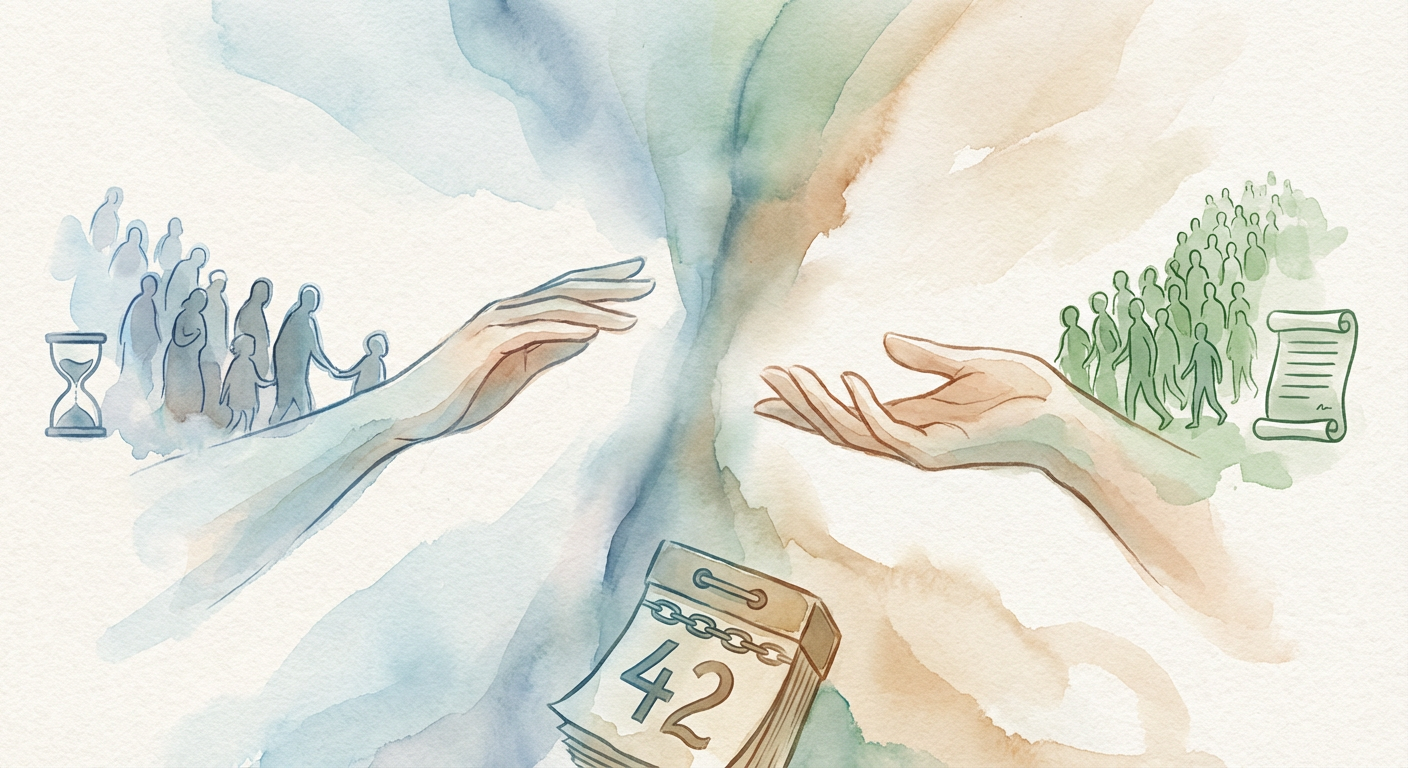
Phase 1 of the agreement was straightforward enough on its face. Hamas would release 33 Israeli hostages over 42 days. In exchange, Israel would release approximately 1,900 Palestinian prisoners, according to the framework published by the Israeli Prime Minister’s Office. Simple arithmetic, or so it seemed.

By late February, 25 of those 33 hostages had been released. That’s progress, measurable and real. But progress stalled. Negotiations for Phase 2, which would cover the remaining hostages and theoretically establish a permanent end to the war, ground to a halt. I’ve watched enough negotiations fail to recognize the pattern: each side accusing the other of moving goalposts, neither willing to be the first to blink. The remaining eight hostages remain in limbo, and so does any permanent resolution. One Israeli family member told me through a mutual contact that the emotional whiplash is almost worse than the original uncertainty. They had their hopes raised and then dashed within weeks.

Aid Trucks and the Infrastructure of Survival

If there’s one metric that shows the ceasefire actually changed something tangible on the ground, it’s this: the UN World Food Programme reported that over 900 aid trucks entered Gaza during the first week of the ceasefire. That’s compared to fewer than 100 trucks per day in late 2024. Nine hundred trucks in seven days versus 700 in the same span just weeks earlier.

What does that mean? It means medicine arriving. It means food reaching distribution centers. It means water trucks getting to neighborhoods where children were drinking contaminated groundwater. I spoke with a logistics coordinator for an international NGO who told me the difference was like someone finally opening a door that had been barricaded shut. The need is still staggering, the infrastructure still devastated, but at least aid workers can now do their jobs without calculating routes around active combat zones.

For the broader context on what’s happening on the ground, UN OCHA Gaza Humanitarian Update provides ongoing reporting, though I’d recommend reading it alongside ground reports from organizations with actual staff in Gaza.

The Reconstruction Question: Fifty-Three Billion Reasons to Worry

Here’s where the numbers get almost too large to comprehend. The World Bank estimated in January 2025 that rebuilding Gaza would cost between $53 billion and $80 billion over the next decade. One World Bank official called it one of the most complex urban reconstruction challenges since World War II. Not just difficult. The most difficult in roughly 80 years.

Think about that for a moment. Gaza’s annual GDP before the war was around $8 billion. We’re talking about reconstruction costs six to ten times that figure. Where does that money come from? Who guarantees it gets spent on reconstruction and not diverted? How do you even begin rebuilding when Phase 2 negotiations have collapsed? These aren’t rhetorical questions. They’re the actual questions keeping serious development professionals awake at night.

For deeper analysis on what reconstruction might actually entail, the World Bank Gaza Reconstruction Assessment is essential reading, though I’d caution that documents like these are written in the conditional tense for a reason. They assume conditions that may not materialize.

What the Numbers Don’t Tell You

I’ve been a reporter long enough to know that statistics, while important, are often the skeleton of a story rather than the full body. Yes, 25 hostages have been released. Yes, aid has increased. Yes, the war has stopped. But what about the people living in tent camps, waiting for news of missing family members? What about the teachers trying to get schools reopened with rubble still blocking the doors? What about the bread baker I heard about from a contact who has to wait hours every day for electricity just to turn on his ovens?

The ceasefire is real. The cessation of large-scale military operations is real. But permanence? That’s what remains uncertain. Phase 1 delivered hostages and opened supply lines. Phase 2 collapsed before it really began. That’s the story these numbers are actually telling: a moment of reprieve in a situation that remains fundamentally unresolved.

I’m tracking developments closely and would genuinely like to hear what you’re seeing, reading, or learning from your own networks. If you have details from Gaza or connected communities that add layers to this picture, I’m listening. That’s how we get closer to the full story.