The Numbers Game Nobody’s Playing
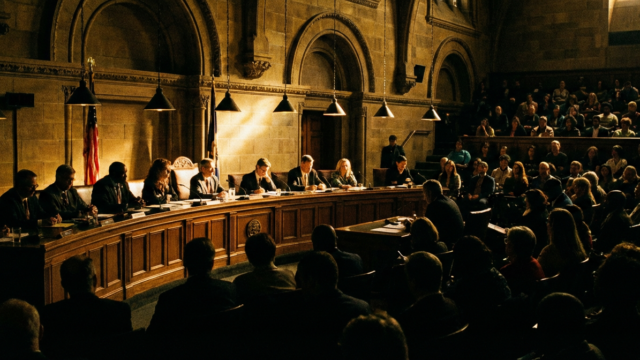
Tuesday night’s city council meeting ran forty-seven minutes longer than usual, and not because Councilwoman Martinez was giving another speech about crosswalk safety. The real drama unfolded in agenda item 7C, buried between a routine parks maintenance contract and a proclamation for National Library Week. Hidden in those sixteen pages of municipal bond refinancing documents was a decision that will ripple through every neighborhood budget for the next two decades.

I’ve covered enough council meetings to recognize when elected officials start using phrases like “fiscal responsibility” and “strategic restructuring” in the same breath. Those are the verbal tells that something bigger is happening than what appears on the surface. This particular vote passed unanimously, without public comment, and locked in a debt service schedule that prioritizes infrastructure projects in three specific districts while pushing maintenance for older neighborhoods to the back burner.
The human story here isn’t about municipal bonds or debt-to-equity ratios. It’s about Mrs. Chen, who’s been calling my office for six months about the storm drain on Maple Street that floods her basement every time we get more than an inch of rain. It’s about the parents in Riverside Heights who’ve been asking for sidewalk repairs so their kids don’t have to walk in the street to get to school. Those projects just got pushed back another three years.

Following the Money Trail
Here’s what happened that Tuesday night, stripped of the municipal jargon: The council approved refinancing existing debt to free up $2.3 million in the current budget. Sounds responsible, maybe even smart. The catch is in how they’re planning to spend that money, and which council members have been pushing hardest for specific allocations.
Councilman Rodriguez, who represents the downtown district, wants better lighting and security around the new mixed-use development on Third Street. Councilwoman Thompson, whose district includes the industrial corridor, wants upgraded traffic signals to handle increased freight traffic from the expanded logistics hub. Both legitimate needs, both expensive, both in areas that have seen significant private investment in the past year.
Meanwhile, Districts 4 and 6, the older residential neighborhoods where most of the city’s families with school-age children live, got budget allocations for studies and assessments. Not actual improvements. When I asked Mayor Patterson about this disparity after the meeting, she talked about “data-driven decision making” and “maximizing return on investment.” Translation: they’re betting on commercial growth over residential maintenance.
The three council members I spoke with afterward all stressed how important it is to attract new business and maintain the city’s competitive edge. Fair enough. But none could give me a timeline for when the deferred residential projects might move forward, or explain why infrastructure improvements always seem to follow the same geographic pattern.
The Patterns You Don’t See in Headlines
This isn’t the first time I’ve noticed this voting pattern. Over the past eighteen months, I’ve tracked infrastructure spending across all six districts, and the numbers tell a clear story. Districts 1, 2, and 5, where property values have increased most dramatically, have received 73 percent of improvement funds, even though they represent only 41 percent of the city’s residential population.
The council isn’t being deliberately exclusionary. They’re making decisions based on economic development strategies that prioritize areas most likely to generate tax revenue growth. From a purely fiscal standpoint, it makes sense. Invest in areas where private money is already flowing, create a multiplier effect, and eventually the increased tax base benefits everyone.
But “eventually” is doing a lot of heavy lifting in that equation, and residents in neglected areas are starting to notice. At last month’s town hall, I counted seventeen questions about infrastructure disparities, compared to three questions about economic development. People understand that their neighborhood isn’t getting the same attention, even if they can’t always put their finger on why.
The most telling moment came during the bond discussion, when Councilwoman Harris asked about timeline projections for residential improvements. The city manager’s response was that they’d “revisit priorities based on revenue performance.” That means those improvements depend on how well the commercial investments pay off. Residents in older districts are being asked to wait while the city bets their infrastructure money on development projects they didn’t vote for.
What This Means for Your Neighborhood
If you live in Districts 4 or 6, that pothole on your street isn’t getting fixed anytime soon, regardless of how many times you call city services. If you’re in Districts 1, 2, or 5, you’ll likely see continued improvements that boost property values and quality of life. The gap between these experiences widens with each budget cycle.
More importantly, this represents a shift in how the city approaches municipal services. Instead of maintaining a baseline level of infrastructure across all neighborhoods, we’re moving toward a model where public improvements follow private investment. That’s not necessarily wrong, but it’s a choice that affects how the city develops over the next decade.
The council members I trust most are the ones willing to acknowledge these trade-offs honestly. Councilwoman Martinez, crosswalk obsession aside, consistently votes to include residential neighborhoods in improvement schedules. Councilman Foster has pushed for more equitable distribution of infrastructure funds, even when it means smaller allocations for his own district’s projects.
These decisions matter because they compound over time. Neighborhoods that receive consistent maintenance and improvement attract new residents and businesses. Areas that get deferred maintenance gradually see declining property values and reduced commercial activity. After a few budget cycles, these patterns become self-reinforcing, making it even harder to justify investments in struggling areas.
Keeping Track of What Matters
The next council meeting is March 15th, and the preliminary budget discussion is on the agenda. Based on conversations with council staff, expect to see similar patterns in the proposed allocations. The parks and recreation budget will likely favor districts where new residential development is planned.
I’ll be tracking those numbers and watching for the human stories behind the spreadsheets. Mrs. Chen’s basement still floods. The sidewalks in Riverside Heights still need repair. These aren’t glamorous issues, but they determine whether neighborhoods thrive or gradually decline.
If you want to understand what’s really happening in city government, don’t just read the meeting minutes or watch the livestream. Follow the money, track the patterns, and pay attention to which council members ask the uncomfortable questions about equity and long-term planning. That’s where you’ll find the story that actually affects your daily life.
Got questions about specific infrastructure projects in your area, or noticed patterns I should be investigating? My contact information is in my bio, and I actually answer my phone. Sometimes the most important stories start with residents who pay attention to what’s happening in their own neighborhoods.