
The Scanner Keeps Crackling
Why does everyone suddenly have an opinion about downtown when the monthly business report hits council chambers? Last Tuesday, as I listened to Mayor Patricia Hendricks announce that “seventeen new businesses opened their doors in the central district this quarter,” my scanner crackled with the usual post-meeting chatter. But something felt off about those numbers, the same way a veteran reporter learns to spot when a budget line item doesn’t quite add up.
I’ve been tracking business openings and closures in this city for twelve years, and I’ve learned that the story behind the statistics often tells us more about who’s controlling the narrative than what’s actually happening on Main Street. Getting accurate counts is hard enough. But understanding how those numbers travel from reality to podium, and what gets lost in translation? That’s the real challenge.
Three phone calls later, I had my answer. The city’s economic development office counts a business as “new” if it registers for a license, regardless of whether it ever opens. Meanwhile, closures only get tallied when someone bothers to formally surrender their license, which about thirty percent of failed businesses never do. Council member Janet Torres, who chairs the economic development committee, admitted she wasn’t aware of this discrepancy until I called.
The Source Chain Breaks Down
Economic development coordinator Michael Chen seemed genuinely surprised when I explained how his department’s methodology skewed the numbers. “We report what the state database shows us,” he said, referring to the business license system that feeds into monthly reports. But databases only capture what gets entered, and Chen acknowledged his office doesn’t verify whether licensed businesses actually operate.
This disconnect between data collection and reality creates a peculiar game of telephone. Chen’s office pulls raw numbers from the state system, summarizes them for department head Rebecca Walsh, who then briefs the mayor’s office. By the time those figures reach the public, they’ve been filtered through four different people, none of whom have walked downtown to see which storefronts are actually occupied.
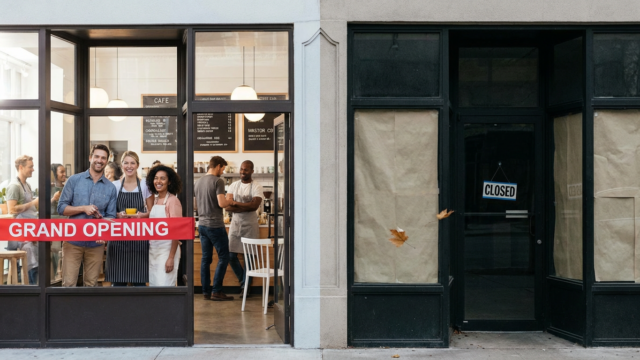
I decided to test this system by conducting my own survey. Walking the six-block downtown core last Thursday, I counted fourteen vacant commercial spaces that still hold active business licenses according to city records. The massage therapy place on Fourth Street has been empty since March, but its license remains current. The boutique clothing store on Market Avenue closed in January, yet the city shows it as an active business because the owner never filed closure paperwork.
Chen promised to cross-reference the license database with utility connection records, which would provide a more accurate picture of actual business activity. “That’s a really good point,” he said. “We should be doing that.”
The Political Layer
Mayor Hendricks’ use of those inflated numbers wasn’t accidental. Her administration has staked its reputation on downtown revitalization, and positive business statistics support that narrative. When I reached her communications director, Sarah Fleming, she emphasized that the mayor relies on official data from city departments.
“The mayor presents the information she receives from staff,” Fleming explained. “If there are concerns about methodology, that’s something for the department heads to address.” This response reveals how information flows, or doesn’t flow, between city hall’s political and administrative sides. The mayor’s office wants good news to announce, and department heads provide it using whatever data collection methods they have.
Council member Torres, however, took a different approach when I shared my findings. She immediately scheduled a meeting with Chen’s office to review data collection procedures. “If we’re making policy decisions based on inaccurate information, that’s a serious problem,” she said. Torres represents the district that includes most of downtown, and she’s been fielding complaints from constituents about empty storefronts that supposedly house thriving businesses.
This political dynamic shapes how business statistics get presented and interpreted. Positive numbers support the current administration’s policies, while negative trends might suggest those policies aren’t working. The temptation to massage data, or simply not look too closely at methodology, becomes almost irresistible.
What the Real Numbers Reveal
After spending two weeks cross-referencing business licenses with utility records, building permits, and my own observations, I found the actual story: eight new businesses opened downtown this quarter, while twelve closed. That’s a net loss of four businesses, not the gain of seventeen that city hall reported.
The closures included familiar names: Rodriguez Family Restaurant, which served authentic Mexican food for six years before COVID-19 finally forced them out in August. Thompson’s Hardware, a downtown fixture since 1987, couldn’t compete with the big box stores and closed quietly in July. Maria Santos, who ran a small accounting firm from the second floor above the old pharmacy, moved her practice to a strip mall after her lease doubled.
But the openings tell a story too. Three of the eight new businesses are service-based operations that don’t require street-level storefronts: a web design consultancy, an insurance agency, and a tax preparation service. Only five new businesses actually contribute to the street-level vitality that downtown revitalization aims to achieve.
When I shared these corrected figures with Chen, he seemed relieved rather than defensive. “This gives us a much clearer picture of what’s actually happening,” he said. “We need to change how we collect and report this information.” He’s now working with the IT department to create a system that flags businesses when their utility accounts close, providing a more accurate closure count.
Following the Information Trail
This investigation revealed something larger than just bad bookkeeping at city hall. It showed how easily official statistics can diverge from reality when nobody questions the methodology behind them. Local media often reports these numbers without verification, creating a public perception that may be completely wrong.
The business community deserves accurate information about economic trends. Property owners need realistic data to make investment decisions. Citizens should know whether their tax dollars are actually supporting effective economic development policies. When city officials present inflated success metrics, it undermines trust and prevents honest assessment of what’s working and what isn’t.
Chen has committed to implementing quarterly physical surveys of downtown businesses, cross-referencing license data with utility records, and providing more detailed breakdowns of business types and locations. Mayor Hendricks’ office says it will wait for the new methodology to be established before making future announcements about business development.
The next time you hear a politician cite business statistics, ask yourself: where did those numbers come from, and who verified them? In an age of data-driven decision making, the quality of our information determines the quality of our choices. Our community deserves better than feel-good fiction disguised as facts.