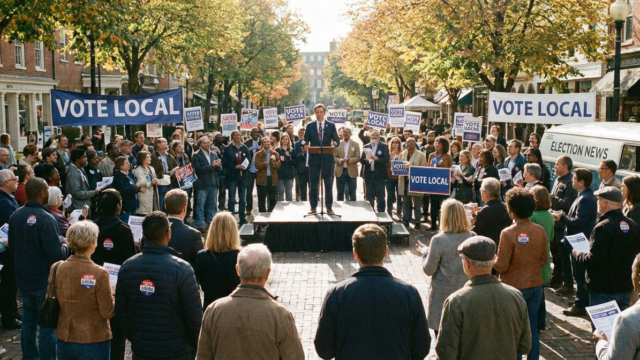
When Margaret Chen pulled her campaign signs from Main Street at 6 AM last Tuesday, she wasn’t the only one. Two other school board candidates made the same quiet decision within 48 hours, leaving voters with more questions than answers just five weeks before election day.
The simultaneous withdrawals of Chen, retired teacher Tom Bradford, and small business owner Lisa Martinez have turned what was already a messy race for three open seats completely upside down. What really bugs me? None of the three will explain why they’re stepping aside now, after months of campaigning and thousands of dollars in filing fees and advertising.
Their silence is deafening. And it tells us something pretty uncomfortable about how local politics really works when nobody’s watching.
The Money Trail That Leads Nowhere
Campaign finance reports tell part of the story. Chen raised $8,200 for her campaign, mostly from individual donors giving $50 to $200 each. Bradford collected $4,800, while Martinez reported $6,400 in contributions. These aren’t huge amounts, but they don’t suggest money problems either.
What the reports don’t show is more interesting. Three political action committees registered to support school board candidates in September, but their donor lists are basically empty. The groups filed paperwork to raise money but reported almost no activity. State election officials say this is legal, if weird.
Deputy Clerk Janet Rodriguez processes campaign filings and has never seen anything like this in twelve years. “Usually when people withdraw this close to an election, there’s a clear reason. Family emergency, health issue, job relocation. These three? Nothing.”
The remaining candidates won’t comment on the withdrawals. Two referred questions to campaign managers who didn’t return calls.
What The Voters Are Losing
Chen was the only candidate with actual solutions to the district’s chronic bus driver shortage. Her plan involved partnership agreements with the community college to train drivers and signing bonuses funded through federal workforce development grants. Bradford brought forty years of classroom experience and specific ideas about teacher retention. Martinez had a detailed plan for upgrading aging school technology systems.
Their withdrawals leave voters choosing among candidates who have been really vague about policy specifics. The remaining slate includes two candidates backed by the teachers’ union, one supported by the local taxpayers’ association, and three others whose positions remain unclear despite multiple candidate forums.
Parent Sarah Williams attended every school board meeting this year after her daughter’s school lost two teachers mid-semester. She planned to vote for Chen based on her transportation proposals. “I spent time researching these people, reading their platforms, asking questions at the forums. Now what? Do I just guess?”
The district has 4,200 students across eight schools with a $34 million annual budget. Board decisions affect everything from class sizes to property tax rates, yet voters now have fewer real choices than they did in September.
The Pressure Campaign Nobody Talks About
Local political observers point to patterns that look like coordinated pressure. All three withdrawn candidates got identical letters from a law firm representing “concerned citizens” questioning their residency qualifications. This despite public records showing each had lived in district for years. The letters arrived within days of each other.
Anonymous flyers appeared in neighborhood mailboxes highlighting minor inconsistencies in candidate statements. Nothing that would legally disqualify anyone from running, but still. Chen’s flyer questioned why someone who worked downtown could represent suburban families. Bradford’s highlighted his divorce from fifteen years ago. Martinez’s focused on a minor zoning violation at her business from 2019.
City Councilwoman Diana Torres served on the school board for six years and recognized the tactics. “This is how you clear the field without breaking election laws. Make it personal, make it uncomfortable, make people question whether it’s worth the fight. Some very effective people just decided it wasn’t.”
None of the remaining candidates admit knowledge of the letters or flyers, though several noted that “competitive races naturally produce opposition research.” Right.
What This Means For November
The withdrawals leave seven candidates competing for three seats, but the math is more complex than that. Two candidates are closely aligned on most issues and likely splitting similar voter blocks. Three others have minimal campaign activity and no significant endorsements.
This creates a race between two factions: union-backed candidates supporting increased education funding and taxpayer-group candidates pushing fiscal restraint. Voters seeking middle-ground options lost them when Chen, Bradford, and Martinez withdrew.
Election officials confirmed that withdrawn candidates’ names remain on printed ballots, though votes for them won’t count. Early voting begins in three weeks. That’s going to confuse voters who aren’t following the race closely.
The bigger impact goes beyond November. When experienced, qualified candidates withdraw from local races under mysterious circumstances, it sends a clear message about who really controls access to elected office. That message reaches potential future candidates who might decide running isn’t worth the personal cost.
Democracy works best when voters have real choices among qualified candidates with different ideas about solving community problems. This election is testing whether that’s still possible here. The answer matters more than who wins in November. It determines who even gets to try.