How Infrastructure Timing Shapes Real Estate Development — And Why It Matters to Your Neighborhood

The Hidden Dance Between Pipes and Property Values

Last month, I sat through four hours of city council budget hearings, watching developers and residents clash over a proposed 200-unit apartment complex on the east side. What struck me wasn’t the familiar arguments about traffic or density, but something more fundamental that few people mentioned: the water main serving that area was installed in 1978 and operates at 60 percent capacity during peak demand.

This detail, buried on page 47 of the environmental impact report, reveals the complex relationship between infrastructure and development that shapes our neighborhoods in ways most residents never see. When developers propose new projects, they’re not just building on empty land. They’re plugging into a web of utilities, roads, and services that were designed decades ago for different population densities and usage patterns.

Understanding this infrastructure foundation helps explain why some developments sail through approval processes while others face years of delays, cost overruns, and community opposition. It also explains why certain neighborhoods see rapid growth while others remain unchanged for decades, despite similar zoning and market conditions.

The Capacity Calculation That Determines Development Fate

Every real estate development begins with a capacity analysis that most people never hear about. Before architects draw their first sketches, engineers calculate whether existing infrastructure can handle additional demand. Water pressure, sewer flow rates, electrical grid capacity, and road intersection levels of service all factor into whether a project moves forward or gets redesigned.

Take the recent controversy over the proposed mixed-use development near the old shopping center. The developer’s initial plan called for 350 residential units and 40,000 square feet of retail space. After infrastructure analysis revealed that the nearest electrical substation was already operating at 85 percent capacity during summer peak hours, the project was scaled back to 280 units with reduced commercial space. The developer faced a choice: pay $2.3 million to upgrade the substation or shrink the project. They chose the latter.

These calculations explain seemingly arbitrary decisions about project size and timing. When developers submit applications that appear perfectly suited to a site but mysteriously get reduced during the approval process, infrastructure limitations are often the culprit. The public hearings focus on parking and building height, but the real constraints were determined months earlier by engineers with calculators and decades-old utility maps.

Why Some Neighborhoods Become Development Magnets

Infrastructure capacity creates invisible development corridors that channel growth toward certain areas while steering it away from others. Neighborhoods built in the 1990s and 2000s often have oversized infrastructure designed to accommodate future growth. These areas become magnets for new development because projects can proceed without expensive utility upgrades.

Conversely, charming older neighborhoods with tree-lined streets and historic character often have narrow water mains, outdated electrical systems, and combined sewer systems that can’t handle significant additional density. Developers avoid these areas not because they lack market appeal, but because infrastructure upgrades can add $50,000 to $100,000 per unit to project costs.

This dynamic creates a development geography that reinforces existing patterns. Newer suburban areas continue growing while older neighborhoods remain largely unchanged, not because of zoning restrictions or community opposition, but because of decisions made by utility engineers 30 or 40 years ago about pipe sizes and electrical capacity.

The Timing Game: When Infrastructure Upgrades Drive Development Waves

Smart developers track infrastructure improvement schedules like stock traders follow earnings reports. When a city announces plans to replace a major water main or upgrade electrical service in an area, experienced developers start acquiring properties nearby. They know that infrastructure improvements create development opportunities that can last for decades.

The downtown warehouse district is a perfect example. For years, developers avoided the area because it lacked adequate sewer capacity for residential conversion. When the city announced a $15 million sewer improvement project in 2019, three different development groups quietly began assembling land parcels. Now, four major residential projects are under construction, all timed to open after the new sewer system comes online next year.

This explains why development often comes in waves rather than steady increments. Infrastructure improvements create windows of opportunity that developers rush to exploit before capacity fills up again. Understanding this cycle helps residents anticipate when their neighborhoods might see development pressure and why certain areas suddenly become hot markets after years of neglect.

Reading the Signs in Your Own Neighborhood

Residents can spot potential development activity by paying attention to infrastructure signals that precede formal project announcements. Utility companies typically conduct capacity studies 12 to 18 months before major developments break ground. If you see crews taking measurements at electrical substations, conducting traffic counts, or testing water pressure at fire hydrants, development applications may be coming.

City council agendas also offer clues. Infrastructure improvement projects funded through development impact fees often indicate that projects are moving through the approval process. When the city allocates funds for traffic signal upgrades or sewer line replacements in specific areas, developers are usually contributing to those costs as part of project mitigation requirements.

The most telling sign is when utility companies request easements or right-of-way acquisitions in residential areas. These requests, often buried in consent calendar items, typically precede infrastructure upgrades that enable development. Residents who pay attention to these seemingly mundane administrative actions can spot development trends months before projects become public.

Following infrastructure patterns gives a more reliable predictor of neighborhood change than tracking zoning proposals or development applications. By the time projects reach public hearings, the fundamental infrastructure decisions have already determined what’s possible. Understanding these underlying systems helps residents engage more effectively with development issues and anticipate changes that will affect their communities for decades to come.
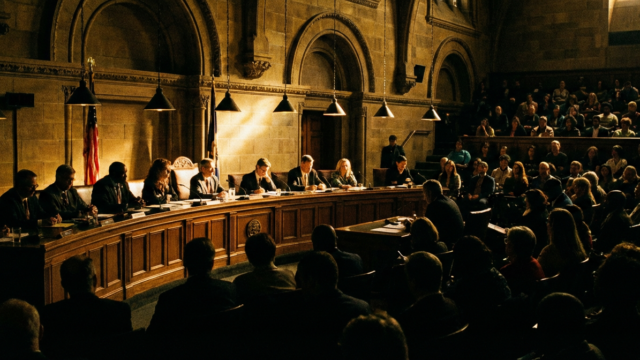
Behind Closed Doors: When Council Votes Tell a Story Your Property Tax Statement Won’t

The Numbers Game Nobody’s Playing

Tuesday night’s city council meeting ran forty-seven minutes longer than usual, and not because Councilwoman Martinez was giving another speech about crosswalk safety. The real drama unfolded in agenda item 7C, buried between a routine parks maintenance contract and a proclamation for National Library Week. Hidden in those sixteen pages of municipal bond refinancing documents was a decision that will ripple through every neighborhood budget for the next two decades.

Behind Closed Doors: When Council Votes Tell a Story Your Property Tax Statement Won't
Behind Closed Doors: When Council Votes Tell a Story Your Property Tax Statement Won’t

I’ve covered enough council meetings to recognize when elected officials start using phrases like “fiscal responsibility” and “strategic restructuring” in the same breath. Those are the verbal tells that something bigger is happening than what appears on the surface. This particular vote passed unanimously, without public comment, and locked in a debt service schedule that prioritizes infrastructure projects in three specific districts while pushing maintenance for older neighborhoods to the back burner.

The human story here isn’t about municipal bonds or debt-to-equity ratios. It’s about Mrs. Chen, who’s been calling my office for six months about the storm drain on Maple Street that floods her basement every time we get more than an inch of rain. It’s about the parents in Riverside Heights who’ve been asking for sidewalk repairs so their kids don’t have to walk in the street to get to school. Those projects just got pushed back another three years.

Illustration for Behind Closed Doors: When Council Votes Tell a Story Your Property Tax Statement Won't
Illustration for Behind Closed Doors: When Council Votes Tell a Story Your Property Tax Statement Won’t

Following the Money Trail

Here’s what happened that Tuesday night, stripped of the municipal jargon: The council approved refinancing existing debt to free up $2.3 million in the current budget. Sounds responsible, maybe even smart. The catch is in how they’re planning to spend that money, and which council members have been pushing hardest for specific allocations.

Councilman Rodriguez, who represents the downtown district, wants better lighting and security around the new mixed-use development on Third Street. Councilwoman Thompson, whose district includes the industrial corridor, wants upgraded traffic signals to handle increased freight traffic from the expanded logistics hub. Both legitimate needs, both expensive, both in areas that have seen significant private investment in the past year.

Meanwhile, Districts 4 and 6, the older residential neighborhoods where most of the city’s families with school-age children live, got budget allocations for studies and assessments. Not actual improvements. When I asked Mayor Patterson about this disparity after the meeting, she talked about “data-driven decision making” and “maximizing return on investment.” Translation: they’re betting on commercial growth over residential maintenance.

The three council members I spoke with afterward all stressed how important it is to attract new business and maintain the city’s competitive edge. Fair enough. But none could give me a timeline for when the deferred residential projects might move forward, or explain why infrastructure improvements always seem to follow the same geographic pattern.

The Patterns You Don’t See in Headlines

This isn’t the first time I’ve noticed this voting pattern. Over the past eighteen months, I’ve tracked infrastructure spending across all six districts, and the numbers tell a clear story. Districts 1, 2, and 5, where property values have increased most dramatically, have received 73 percent of improvement funds, even though they represent only 41 percent of the city’s residential population.

The council isn’t being deliberately exclusionary. They’re making decisions based on economic development strategies that prioritize areas most likely to generate tax revenue growth. From a purely fiscal standpoint, it makes sense. Invest in areas where private money is already flowing, create a multiplier effect, and eventually the increased tax base benefits everyone.

But “eventually” is doing a lot of heavy lifting in that equation, and residents in neglected areas are starting to notice. At last month’s town hall, I counted seventeen questions about infrastructure disparities, compared to three questions about economic development. People understand that their neighborhood isn’t getting the same attention, even if they can’t always put their finger on why.

The most telling moment came during the bond discussion, when Councilwoman Harris asked about timeline projections for residential improvements. The city manager’s response was that they’d “revisit priorities based on revenue performance.” That means those improvements depend on how well the commercial investments pay off. Residents in older districts are being asked to wait while the city bets their infrastructure money on development projects they didn’t vote for.

What This Means for Your Neighborhood

If you live in Districts 4 or 6, that pothole on your street isn’t getting fixed anytime soon, regardless of how many times you call city services. If you’re in Districts 1, 2, or 5, you’ll likely see continued improvements that boost property values and quality of life. The gap between these experiences widens with each budget cycle.

More importantly, this represents a shift in how the city approaches municipal services. Instead of maintaining a baseline level of infrastructure across all neighborhoods, we’re moving toward a model where public improvements follow private investment. That’s not necessarily wrong, but it’s a choice that affects how the city develops over the next decade.

The council members I trust most are the ones willing to acknowledge these trade-offs honestly. Councilwoman Martinez, crosswalk obsession aside, consistently votes to include residential neighborhoods in improvement schedules. Councilman Foster has pushed for more equitable distribution of infrastructure funds, even when it means smaller allocations for his own district’s projects.

These decisions matter because they compound over time. Neighborhoods that receive consistent maintenance and improvement attract new residents and businesses. Areas that get deferred maintenance gradually see declining property values and reduced commercial activity. After a few budget cycles, these patterns become self-reinforcing, making it even harder to justify investments in struggling areas.

Keeping Track of What Matters

The next council meeting is March 15th, and the preliminary budget discussion is on the agenda. Based on conversations with council staff, expect to see similar patterns in the proposed allocations. The parks and recreation budget will likely favor districts where new residential development is planned.

I’ll be tracking those numbers and watching for the human stories behind the spreadsheets. Mrs. Chen’s basement still floods. The sidewalks in Riverside Heights still need repair. These aren’t glamorous issues, but they determine whether neighborhoods thrive or gradually decline.

If you want to understand what’s really happening in city government, don’t just read the meeting minutes or watch the livestream. Follow the money, track the patterns, and pay attention to which council members ask the uncomfortable questions about equity and long-term planning. That’s where you’ll find the story that actually affects your daily life.

Got questions about specific infrastructure projects in your area, or noticed patterns I should be investigating? My contact information is in my bio, and I actually answer my phone. Sometimes the most important stories start with residents who pay attention to what’s happening in their own neighborhoods.

The Friday Night Lights Are Dimming: How Budget Cuts Are Reshaping Local High School Sports

When the Stadium Goes Dark

The floodlights at Memorial Stadium haven’t worked properly in three weeks. Instead of the brilliant white glow that once illuminated Friday night football games, half the field now sits in shadow while maintenance crews jerry-rig temporary lighting with equipment borrowed from the fire department. It’s a small detail that tells a much bigger story about what’s happening to high school athletics across our community.

The Friday Night Lights Are Dimming: How Budget Cuts Are Reshaping Local High School Sports

I’ve covered city council meetings for fifteen years, and I’ve learned to read between the budget lines. What I’m seeing in school district finances isn’t just numbers on a spreadsheet. It’s the slow erosion of programs that have anchored our community for generations. When Superintendent Maria Santos quietly mentioned a “reorganization of extracurricular activities” during last month’s board meeting, I knew exactly what that meant. Three phone calls later, I had confirmation: significant cuts are coming to high school sports programs.

The national conversation about education funding often focuses on classroom resources and teacher salaries. Those are critical issues, but they miss something equally important. High school sports programs are community gathering points, character-building experiences, and for many students, the primary reason they stay engaged with school at all. When these programs disappear, we lose more than games and trophies.

Illustration for The Friday Night Lights Are Dimming: How Budget Cuts Are Reshaping Local High School Sports

The Numbers Behind the Headlines

Our school district faces a $2.3 million budget shortfall this year, according to documents I obtained through a public records request. Transportation costs have increased 18% because of fuel prices and driver shortages. Special education mandates require an additional $400,000 in staffing. Meanwhile, state funding remains flat, and the last tax levy failed by 127 votes.

Athletic programs represent roughly 8% of the district’s general fund budget, but they’re often the first target when cuts become necessary. Unlike core academic subjects, sports programs aren’t protected by state mandates. They’re also highly visible, which makes them politically easier to eliminate than reducing administrative positions or cutting classroom supplies.

The ripple effects extend beyond the obvious. When Lincoln High eliminated its swimming program two years ago, the community pool lost $15,000 in annual rental fees. Local restaurants that relied on post-game crowds from away teams saw a measurable drop in Friday night revenue. The uniform supplier that had worked with the district for twelve years had to lay off two employees when orders decreased.

These connections matter because they show how school budget decisions affect the entire economic ecosystem of a small community. Every eliminated sport means lost jobs, reduced business activity, and fewer reasons for families to put down roots here.

Where the Money Actually Goes

I requested detailed spending reports for athletics from the past five years, and the results challenged some common assumptions. Equipment costs, often cited as the primary expense, actually represent only 23% of the total athletic budget. The largest expense is personnel: coaches’ stipends, transportation, and facility maintenance account for nearly 60% of spending.

Transportation costs alone increased 31% since 2019. When the wrestling team travels to a tournament three hours away, the district pays for a bus driver’s wages, fuel, and often an overnight stay. Multiply that across fifteen sports and dozens of competitions, and the numbers add up quickly. Some districts have started requiring parents to drive their own children to away games, but that creates equity issues for families without reliable transportation.

Insurance is another growing expense that rarely makes headlines. Liability coverage for contact sports has increased 45% in three years because of increased awareness of concussion risks and larger legal settlements. The district now pays $180,000 annually for sports-related insurance, compared to $124,000 in 2020.

Meanwhile, community fundraising efforts struggle to keep pace. The football booster club raised $8,400 last year, down from $12,200 in 2019. Parent volunteers are exhausted from pandemic-related disruptions, and local businesses face their own financial pressures. The traditional funding sources that once supplemented district budgets simply aren’t there anymore.

The Domino Effect on Student Lives

Behind every budget line item are real students whose opportunities are disappearing. I spoke with Jennifer Martinez, whose daughter Sofia is a junior at Roosevelt High. Sofia had planned to pursue a track scholarship to help pay for college, but the distance running program was eliminated in February because of a lack of coaching volunteers and transportation costs.

These stories repeat across our community. The debate team at Central High disbanded when their faculty advisor took a second job to supplement her teaching salary. The golf team practiced all winter in preparation for a spring season that was cancelled three weeks before their first match. Each cancellation means lost games, lost college recruitment opportunities, lost leadership experiences, and lost connections to school.

Research consistently shows that students involved in extracurricular activities have higher graduation rates and better attendance records. They’re also more likely to develop the time management and teamwork skills that help them in college and careers. When we eliminate these programs, we’re not just cutting costs. We’re reducing the tools available to help students succeed.

The social implications extend beyond individual students. High school sports have traditionally been bridges between different economic and social groups within our community. The star quarterback and the equipment manager, the cheerleader and the student trainer, these activities create relationships across typical high school social boundaries. When the programs disappear, those connections disappear too.

Looking for Solutions in Unexpected Places

Some communities are finding creative ways to preserve athletics despite budget constraints. Three districts north of us have formed a cooperative agreement that allows them to field joint teams in less popular sports like tennis and golf. Students compete under a shared banner, which reduces per-district costs while maintaining opportunities.

Others are exploring public-private partnerships. A manufacturing company in the next county adopted the local high school’s baseball program, providing equipment and field maintenance in exchange for naming rights and community goodwill. The arrangement saved the district $18,000 annually while giving the company a visible way to support education.

Technology offers some solutions too. Live streaming equipment purchased through a one-time grant allows distant family members to watch games online, potentially expanding the donor base for athletic programs. Some schools charge nominal fees for streaming access, creating a new revenue stream that didn’t exist five years ago.

The key is recognizing that these challenges require community-wide solutions. School districts alone can’t solve budget problems that stem from broader economic pressures. But working together, schools, businesses, and residents can find ways to preserve the programs that make our community stronger.

If you’ve been following this story and want to help shape what comes next, the next school board meeting is Tuesday at 7 PM in the district office. I’ll be there with my notebook, asking the questions that need answers. But this time, I hope I won’t be the only one in the audience who cares about keeping our Friday night lights burning bright.

Behind the Scenes: How Small-Town Festivals Weather Economic Storms and Keep Communities Together

The Numbers Don’t Lie, But They Don’t Tell the Whole Story

When Mayor Patricia Chen handed me the preliminary budget report for next year’s Harvest Moon Festival last Tuesday, the spreadsheet told a familiar story. Vendor fees up 18 percent. Insurance costs climbing another $3,200. The city’s contribution holding steady at $15,000 while everything else inflates around it.

Behind the Scenes: How Small-Town Festivals Weather Economic Storms and Keep Communities Together

But Chen’s face told a different story entirely. After 12 years organizing this festival, she knows what those numbers really mean. “We’re not just talking about corn dogs and face painting,” she said, leaning back in her office chair surrounded by three decades of festival photos. “We’re talking about whether the Hendersons can afford their booth space this year, and whether our local nonprofits lose their biggest fundraising weekend.”

It’s a conversation happening in city halls across the country. National inflation hit 6.4 percent, but for small-town festivals, the real impact shows up in places economists never measure. Like the $800 increase in liability insurance that forces organizers to choose between hiring security or keeping admission free.

Illustration for Behind the Scenes: How Small-Town Festivals Weather Economic Storms and Keep Communities Together

When Tradition Meets Economic Reality

Three weeks ago, I sat in on the festival planning committee meeting in the basement of the United Methodist Church. The same basement where this committee has met every third Thursday for 23 years. What changed this year was the tone.

Committee treasurer Bob Martinez pulled out receipts dating back to 2019. The cost of renting those big white tents jumped 40 percent. The high school band’s bus rental went from $400 to $650. Even the porta-potty company added a fuel surcharge.

But here’s what surprised Martinez when he dug deeper into the numbers. While costs climbed, vendor applications actually increased 12 percent this year. Local businesses see the festival as essential marketing, worth the higher fees. “The pottery studio signed up for a double booth this time,” Martinez noted. “They said last year’s festival sales carried them through the slow winter months.”

Sarah Kim from the chamber of commerce has been tracking these trends across our region. Festivals in towns under 15,000 people report similar patterns. Higher costs, yes, but also higher stakes. “When Main Street retail is struggling, these events become the lifeline,” she explained. “They’re not just community gatherings anymore. They’re economic engines.”

Innovation Born from Necessity

The Henderson family has run their caramel apple stand at every Harvest Moon Festival since 1987. This year, for the first time, they’re sharing booth space with three other vendors. It started as a cost-cutting measure when booth fees jumped to $275. Now it’s become something else entirely.

“We’ve got the apples, Jenny makes those incredible kettle corn varieties, and Mike brings his wood carvings,” explained Linda Henderson. “People love the variety, and we’re splitting costs four ways instead of each of us struggling alone.”

Festival coordinator Maria Santos calls it “collaborative vending,” and she’s seeing it everywhere. The face painting booth now offers temporary tattoos. The quilt guild partnered with the historical society for a combined display. Even the fire department joined forces with the EMT volunteers for their dunking booth fundraiser.

It’s not just about saving money. Santos points out that these partnerships create more dynamic attractions. “When people see four different craftspeople working in one space, they stay longer. They buy more. They talk to more neighbors.”

The Hidden Infrastructure of Community

Most people walking through the festival grounds next Saturday won’t notice the months of phone calls, permit applications, and budget negotiations that made it possible. They won’t see the 6 a.m. setup crew or the midnight breakdown team. They definitely won’t know about the heated city council debate over whether to increase the festival’s line item in next year’s budget.

But they will notice other things. Like how Mrs. Patterson from the library knows every kid’s name when she hands out free books. How the high school seniors use festival volunteer hours to fund their graduation party. How the Methodist church’s chili booth raises money for the food pantry that quietly feeds 40 families each month.

This infrastructure of connection doesn’t appear in any budget report. Yet it’s what transforms a collection of vendor booths into something irreplaceable. Last month, when the Riverside Cafe closed after 15 years, owner Janet Cole said the community support she felt every festival season was one of the hardest things to leave behind.

“People would come to my booth just to check on me,” Cole remembered. “Not to buy coffee, but to see how business was going, whether I needed anything. You can’t put a price on that kind of caring.”

Looking Forward: What Sustainability Really Means

Next year’s budget meeting is scheduled for January 15th. Chen already knows the conversation will be difficult. Rising costs aren’t slowing down, and the city’s revenue streams remain limited. But she’s also seen something in the data that gives her hope.

Attendance has grown every year for the past five years. Not dramatically, but consistently. More important, the economic impact study commissioned last year showed festival weekend generates approximately $78,000 in local spending. That’s nearly five times the city’s investment.

The real measure of success, though, might be in the details. Like how the festival committee now includes four people under 35. How local businesses report their best sales weekend of the year. How families plan their entire October around this one Saturday in our town square.

Chen put it simply: “We’re not just preserving a tradition. We’re investing in what makes this place worth staying in.”

The Harvest Moon Festival runs from 10 a.m. to 8 p.m. this Saturday in Memorial Park. If you see me there, I’ll be the one with the notebook, asking vendors about their sales and watching how this community comes together when it matters most. Because sometimes the best stories happen right in our own backyard.

The Quiet Crisis: How Local News Collapse Reshapes American Communities

The Vanishing Voices of Main Street

American communities are losing their watchdogs at an alarming pace. Since 2005, more than 2,500 local newspapers have closed their doors, leaving entire regions without dedicated coverage of city council meetings, school board decisions, or courthouse proceedings. This isn’t just a business story about declining circulation numbers.

The consequences run deep into local democracy itself. When newspapers disappear, voter turnout often drops in municipal elections. Corruption investigations become rarer. Community events lose their chroniclers. More than 200 counties now exist as complete news deserts, where residents must rely on social media rumors or distant metropolitan outlets for glimpses of local governance.

This didn’t happen overnight. The collapse accelerated as digital advertising revenue moved to tech platforms, while subscription models struggled to replace the reliable income streams that once kept small-town journalism alive. The result is a crisis that touches every corner of American civic life, from rural farming communities to aging industrial towns.

Innovation in the Ruins

But from this apparent devastation, new models are taking root. Nonprofit journalism has become a particularly strong alternative, with more than 300 organizations now operating across the United States. These outlets operate under different economic pressures than their commercial predecessors, often relying on foundation grants, individual donations, and community partnerships rather than traditional advertising revenue.

Major tech companies have also recognized what’s at stake. Google’s News Initiative has committed over $300 million to support local journalism projects worldwide, funding everything from newsroom training programs to technological infrastructure improvements. These investments admit that the information ecosystem needs active support rather than just market forces.

The Nieman Lab journalism research consistently shows that communities with strong local news coverage tend to have more engaged citizens and more accountable governance. This connection has prompted foundations, universities, and civic organizations to experiment with sustainable funding mechanisms that treat local journalism as essential infrastructure rather than luxury commerce.

The Subscription Renaissance

Among surviving commercial outlets, a fundamental shift is underway. Publishers are discovering that reader revenue can provide more stable income than the advertising models that dominated the industry for decades. Subscription-based business models now generate the primary revenue stream for many local news organizations, creating direct relationships between journalists and their communities.

This transition requires newsrooms to think differently about their audience relationships. Instead of chasing page views to attract advertisers, successful outlets focus on delivering coverage that readers will pay to support. The most effective strategies combine essential civic reporting with community engagement that strengthens subscriber loyalty.

But this model has its own challenges. Subscription paywalls can accidentally create information inequality, where access to local news depends on economic status. Publishers must balance financial sustainability with their democratic mission to keep communities informed regardless of individual purchasing power.

The AI Question Mark

As newsrooms shrink and resources become scarce, artificial intelligence tools are increasingly filling content gaps. Some publishers use AI systems to generate routine coverage of sports scores, weather updates, or municipal meeting summaries. While these technologies can help stretched newsrooms maintain basic coverage, they raise serious concerns about accuracy and community trust.

AI-generated local news lacks the understanding that comes from years of covering the same beat. Automated systems might miss the significance of a zoning decision or fail to recognize when a routine agenda item masks a larger community controversy. The Poynter media criticism regularly examines these quality control challenges as newsrooms navigate between efficiency and editorial standards.

More troubling are instances where AI content appears without clear disclosure, potentially misleading readers about the source and verification standards behind their local news. Building sustainable journalism requires maintaining public trust, which depends on transparency about both human and technological contributions to news production.

Reimagining Community Information

The path forward likely involves hybrid approaches that combine traditional journalism skills with innovative distribution methods and funding mechanisms. Some communities are experimenting with cooperative ownership models where residents directly invest in local news coverage. Others are integrating journalism functions into libraries, community colleges, or civic organizations.

Digital tools can amplify rather than replace human reporting when used strategically. Social media platforms enable direct community engagement, while data visualization tools help explain complex local issues. The most successful emerging outlets blend technological efficiency with deep community knowledge that only comes from sustained local presence.

Most importantly, communities are learning that sustainable local journalism requires active participation from residents, businesses, and institutions. The passive consumption model that characterized much of 20th-century media is giving way to more collaborative relationships where community members contribute story ideas, provide sources, and support coverage financially.

The future of local news will likely look quite different from its past, but the fundamental need for community-centered journalism hasn’t changed. As these new models mature and prove their effectiveness, they offer hope that American communities can rebuild the information infrastructure necessary for informed self-governance and civic engagement.

The Transformation of Local News: How Communities Are Rebuilding Information Infrastructure

The Scale of Local News Collapse

The numbers tell a stark story about American journalism’s transformation. Since 2005, more than 2,500 local newspapers have shuttered their doors permanently, leaving entire communities without dedicated coverage of city council meetings, school board decisions, or local court proceedings. This closure wave has created what researchers call “news deserts” — areas where residents have little to no access to local reporting.

The Transformation of Local News: How Communities Are Rebuilding Information Infrastructure

These information voids now span over 200 counties nationwide, affecting millions of Americans who once relied on community newspapers for accountability journalism and civic engagement. When local newsrooms disappear, it doesn’t just mean lost jobs or failed businesses. It fundamentally changes how communities understand themselves and take part in democratic processes.

Rural areas got hit the hardest, but suburban and urban neighborhoods haven’t escaped either. Weekly papers that covered municipal politics for decades have vanished. Daily newspapers have consolidated coverage areas or eliminated local bureaus entirely. The result is a messy information landscape where some communities get intensive coverage while others operate in near-complete media darkness.

Nonprofit Models Rise as Commercial Ventures Struggle

As traditional commercial newspapers struggle with declining advertising revenue and circulation, nonprofit journalism has emerged as a viable alternative. More than 300 nonprofit news organizations now operate across the United States, supported by foundation grants, individual donations, and membership programs rather than traditional advertising models.

These organizations range from single-reporter operations covering specific neighborhoods to multi-state networks employing dozens of journalists. Some focus exclusively on government accountability, while others provide comprehensive community coverage. What they share is a focus on public service journalism freed from the profit pressures that have decimated commercial newsrooms.

The nonprofit approach lets news organizations prioritize coverage based on community need rather than advertiser interests. This model has proven particularly effective for investigative reporting and coverage of underserved communities that commercial outlets often overlook because the demographics don’t align with advertiser preferences.

Technology Giants Step Into the Funding Gap

Major technology companies have begun investing heavily in local journalism sustainability, recognizing both their role in disrupting traditional media economics and their stake in maintaining healthy information ecosystems. Google’s News Initiative has committed over $300 million to support local journalism projects worldwide, focusing on digital transformation, audience development, and revenue diversification.

These investments take various forms, from direct grants to news organizations to technology platforms that help publishers better understand their audiences and optimize their content distribution. But this corporate philanthropy raises complicated questions about editorial independence and the long-term sustainability of relying on technology companies to fund journalism.

The relationship between platforms and publishers remains messy. While Google and Facebook have created funding programs for journalism, these same companies have fundamentally changed how news reaches audiences and how advertising revenue flows through the media ecosystem. Critics argue that platform funding represents a small fraction of the advertising revenue that once supported local journalism.

The Subscription Economy Transforms News Business Models

Perhaps the most significant shift in local journalism economics has been the transition from advertising-dependent to subscriber-supported revenue models. News organizations across the country report that subscription and membership income now makes up their primary revenue stream, reversing decades of advertiser-focused business strategy.

This transformation requires newsrooms to fundamentally reconsider their relationship with their audience. Instead of selling reader attention to advertisers, successful local news organizations now focus on providing value directly to community members willing to pay for quality coverage. According to Nieman Lab journalism research, this shift has encouraged more targeted, community-focused reporting that addresses specific local concerns rather than broad-appeal content designed to maximize page views.

The subscription model also creates more sustainable relationships between newsrooms and their communities. When readers invest financially in local coverage, they become stakeholders in the news organization’s success. This dynamic can lead to increased community engagement, more responsive coverage, and stronger accountability journalism that serves local interests rather than distant corporate priorities.

AI and Automation: Promise and Peril for Local Coverage

Artificial intelligence and automated content generation have introduced new possibilities and concerns for local journalism. Some news organizations experiment with AI tools to produce routine coverage of municipal meetings, sports scores, and weather events, potentially reducing costs and expanding coverage capacity.

But AI-generated local news raises serious questions about accuracy and community trust. Local journalism depends heavily on relationships, institutional knowledge, and contextual understanding that current AI systems can’t replicate. When automated systems produce coverage of sensitive local issues without human oversight, the potential for errors or misrepresentation increases substantially.

Industry observers at organizations like Poynter media criticism emphasize that while technology can enhance journalistic efficiency, it cannot replace the human judgment and community connections that make local reporting valuable. The challenge lies in integrating helpful automation while maintaining the quality and trustworthiness that communities expect from their local news sources.

The future of local journalism will likely combine elements from all these emerging models: nonprofit funding structures, technology company support, subscription-based revenue, and carefully implemented automation tools. Success will depend on news organizations’ ability to adapt these approaches to their specific community needs while maintaining the editorial independence and accuracy that make local journalism essential to democratic society. As these experiments continue, communities nationwide are discovering that sustainable local news requires active participation from readers, civic leaders, and technology partners working together toward shared information goals.